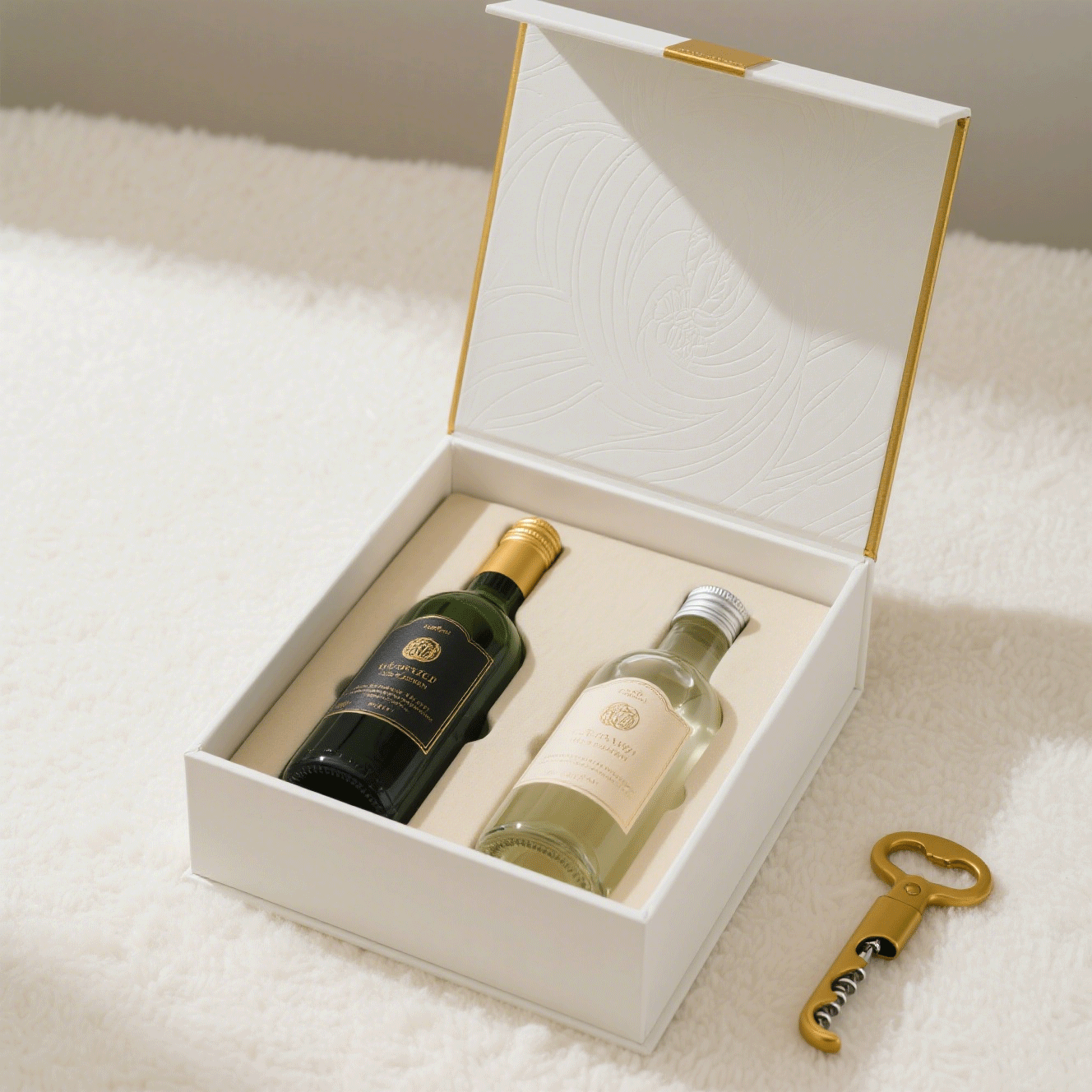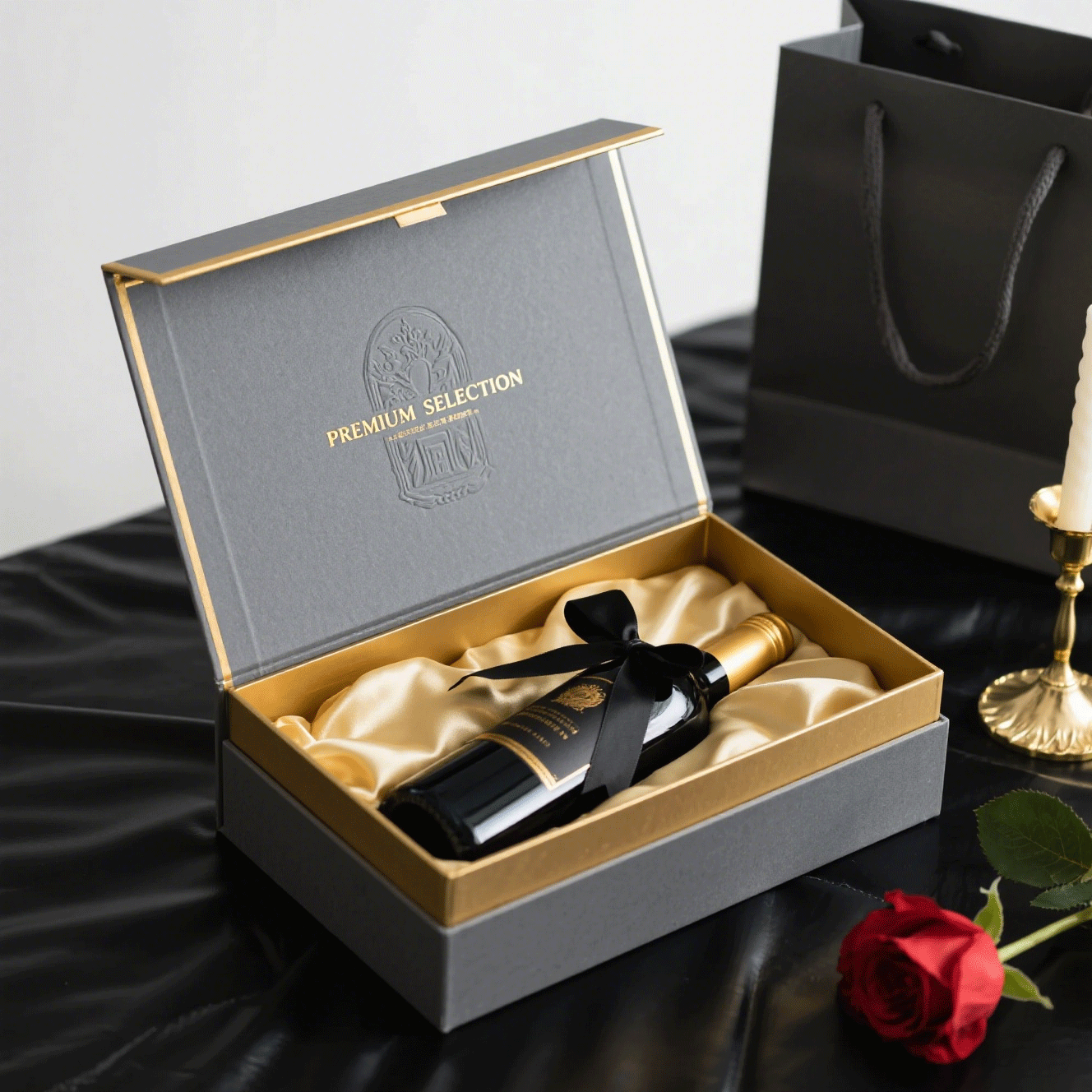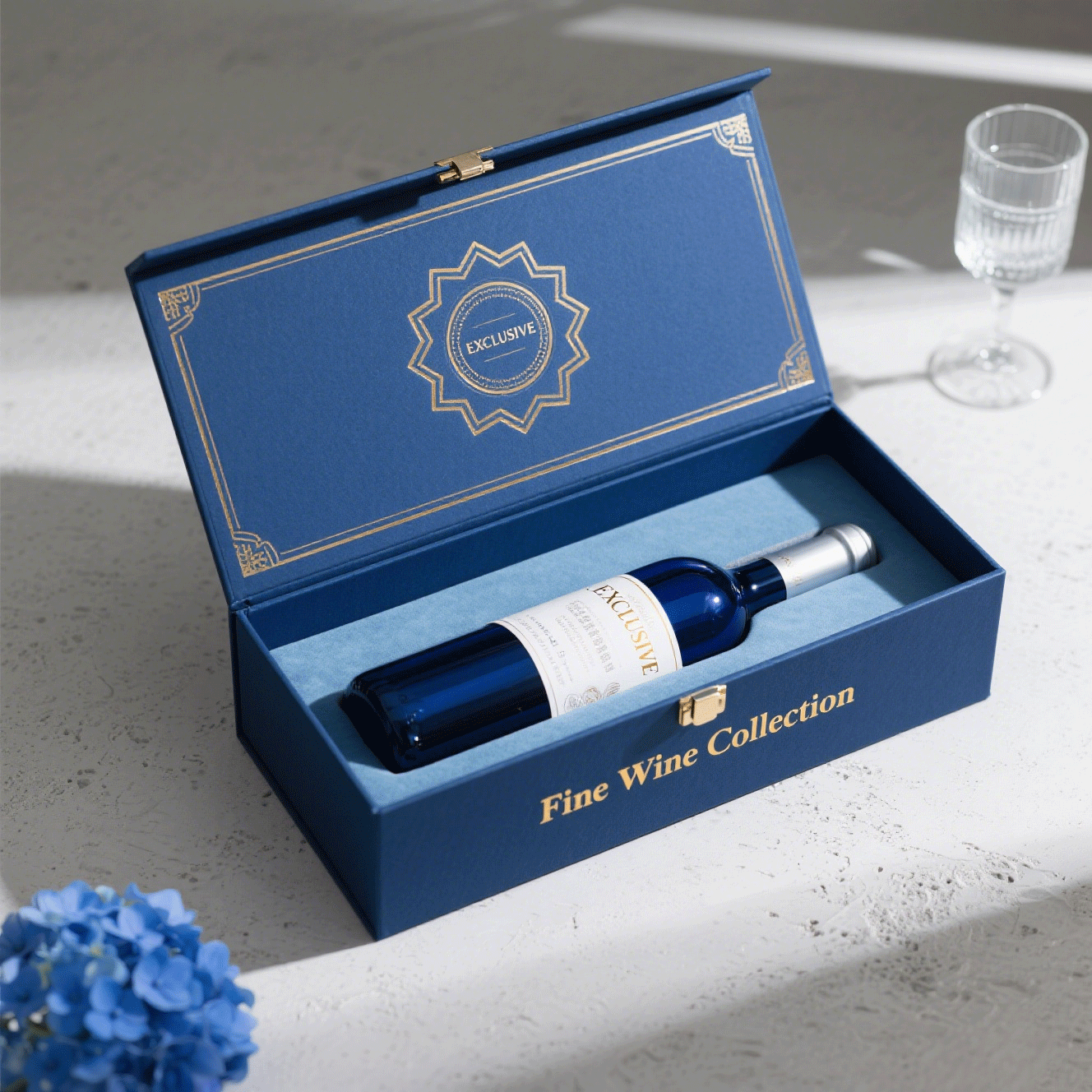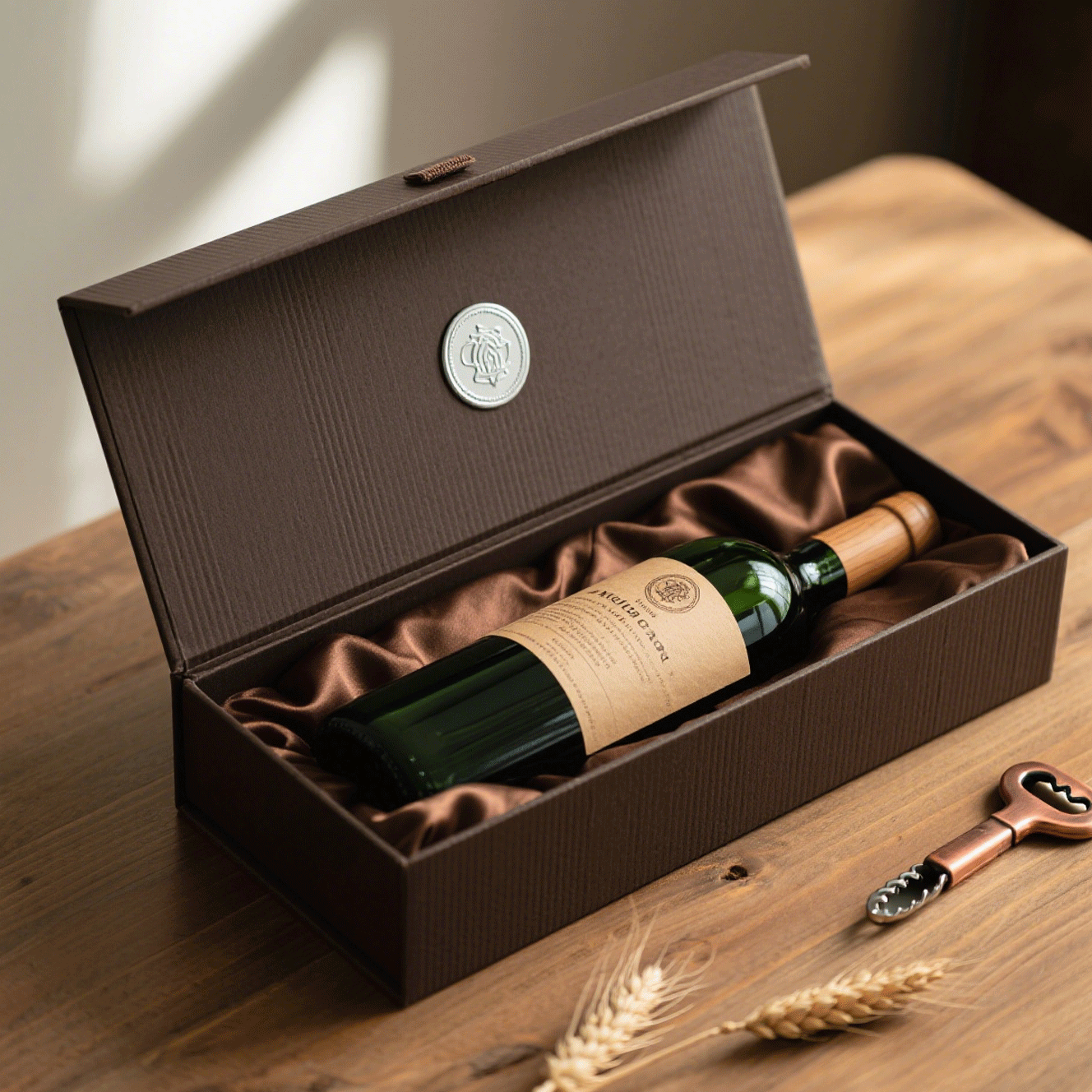
Glass candles jars are very bulky and hardy and can easily be broken or shattered under the slightest collision. A broken rim or a chipped bottom usually does not occur due to the rough treatment by itself rather due to the internal movement, which causes stress spots during transportation.
Inserts do most of the paddling here – much more so.
Core Functions of Inserts in Candle Packaging
- Accurate product placement – Makes the jar stand upright.
- Shock absorption Cushions bumps and shocks.
- Restriction of movement – -Eradicates rattling or shaking during transit.
- Control over unboxing presentation – makes sure that the candle is in the right spot to create the right first impression.
Even the strongest rigid box will not be able to protect the candles in as many handling operations – at the warehouse to the door-step – without a well-fitted insert.
EVA Inserts: Maximum Protection for Heavy and Premium Candles
Where the glass candles are high or heavier (think 8-12 oz jars and above) EVA (ethylene-vinyl acetate) inserts stand out as the go-to for superior protection.
EVA is thick and firm, as well as custom-cut to fit the precise jar shapes, allowing barely any motion inside the jar.
EVA Insert Key Characteristics
- Density: Sharp-dense Value: Virgin but not stiff.
- Shock absorption: Good – bounces on hitting a wall.
- Shape retention: eigenic – has form despite repetition use.
- Cost level: Higher – indicates accuracy in tooling.
- Best in: Freighting Long-haul, heavy jars, high-quality candles.
EVA records the least cases of breakage on luxury candle lines in our experience of the production, particularly when it is combined with rigid magnetic close boxes. The catch? It also requires small manufacturing tolerances – any change in cutting or density can make it less efficient.
Foam Inserts: Cost-Effective Cushioning for Lightweight Candles
Foams (usually PU or lower density types) offer a viable compromise between protection and cost.
They are superior in overall cushioning as opposed to fasten and firm lockdown, which fits the light Candles or shorter supply chains.
Foam Insert Key Characteristics
- Density: medium – more compressible and soft.
- Shock absorption: Moderate – good when it comes to day-to-day bumps.
- Structural stability: This is Medium – permits slight flex.
- Level of cost: Low-er — faster and cheaper to manufacture.
- Well-suited to: Lightweight of jars, regional delivery, middle of the range brands.
Even minor differences in sizes of jars can be forgiven by Foam, yet it can compress with time or enable other heavier candles to move around when not cut at a point.
Molded Pulp Inserts: Sustainable Structural Support
Empowered pulp moulded inserts have been gaining popularity within eco-friendly candle companies. They are created using recycled paper fibers and provide a well-designed form-fit support at the least environmental cost.
The foam or EVA is lightweight and soft, whereas the molded pulp is cradle-like coming at the expense of soft cushions.
Molded Pulp Insert Key Characteristics
- Sustainability: High Biodegradable, Compostable, recycled material.
- Structural support: Good – accurate fit in cavity.
- Shock absorption: Less than EVA – based on the fit and outer box stiffness.
- Tooling demand: Increased start-up (molds).
- Best in: environmentally conscious lines, lux theory candles that are ecological.
Molded pulp has been proven to work in controlled logistics where the outer box is rigid and tolerances are tight. Very heavy jars require extra engineering before it is so forgiving.
EVA vs Foam vs Molded Pulp: Side-by-Side Comparison
The following is a realistic plan in reference to actual candle packaging undertakings:
| Comparison Factor | EVA | Foam | Molded Pulp |
| Protection level | High | Medium | Medium |
| Glass jar stability | Excellent | Moderate | Good |
| Sustainability | Low | Low | High |
| Cost efficiency | Low | High | Medium |
| Dimensional tolerance | Low (needs precision) | High | Low (mold-dependent) |
| Best use case | Premium/heavy candles | Lightweight/mid-range | Sustainable brands |
| Manufacturing consistency | High (with strict QC) | Medium | High (once tooled) |
It depends not only on unit price but on your weight of candles, the average distances of shipping, brand value, and also the size of your order.
Inserts Must Work as Part of a Complete Packaging System
No insert population glowing. The rigidity and folding carton (outer box), insert fitting and assembly procedure should all be unified to fit.
Premium rigid box and an incorrect insert may spell damage whereas a carefully planned insert may lift even the simple box construction. In Crown Win we validate full assemblies in drop and vibration conditions to ascertain actual performance in the real world.
Manufacturing Consistency and Insert Accuracy
Consistency is what makes the difference in case of reliable suppliers and inconsistent suppliers. The breakage rates can increase dramatically with variations in the volume of a small change in the dimensions of the insert, the density, or its position.
Critical Manufacturing Factors
- Constant sourcing and density of raw materials.
- Sub-micrometer die cutting or molding (at least -.5mm or less)
- Experts fine-tune the insertion of the boxes.
- Manual/semi-automated repetitive placement.
In the case of scaling candle brands, these details have been known to keep the damage claims at or close to zero or that they skyrocket.
Common Mistakes When Choosing Candle Packaging Inserts
These trapfalls have seen brands fall foul of the following:
- The emphasis on unit cost as opposed to total landed performance.
- Neglect of the medium of exchange which is the weight and weight-gap.
- The insert was a single generic one and was used on several jar sizes.
- Omissions of using real drop/vibration testing.
- No engineering customizations are required in assuming sustainable options.
These problems can be identified at an early stage by testing the prototypes in real-world logistics conditions.
Conclusion — Inserts Are a Structural Decision, Not an Afterthought
Custom inserts do not come as extras, they are a key to securing glass candles, decreasing returns, and providing customers with perfect unboxing experiences.
You may require the stability of EVA inserts, the cost-effectiveness of foam inserts, or the sustainability goals of the molded candidate pulp candidate candle inserts, but overall, they must reflect your product requirements, environmental goals, and supply-chain real-world requirements.
The approach to inserts as a fundamental part of the structure provides assistance in cutting damage to candles, improving the retail/e-commerce performance and creating trust between the brands and the customers.Ready to find the right insert solution for your next candle collection? Explore our custom candle packaging with protective inserts — we handle everything from engineering to full-assembly QC under one roof.