
The use of child-resistant packaging in the vape and e-cigarette products is mainly to ensure that young children do not use any nicotine liquid or device that might cause unintentional poisoning to the child. In contrast to several consumer goods, they tend to be concentrated in bottles, cartridges, or pods, which are substances that are extremely toxic to the body and cause severe risks of toxicity, even in low quantities. Incidences that are related to packaging are often not caused by the lack of warning labels, but structural defects or uneven performance that results in the easy access of the packaging by inquisitive hands.
One such misguided notion that brands follow is child-resistant packaging being seen as the regulatory box being checked. As a matter of fact, it serves as a fundamental preventative safety system which keeps the children safe, limits brand exposure to damages, and keeps compliance integrity intact with time. Child-resistant packaging refers to a safety mechanism aimed at protecting children, decreasing brand risk, and facilitating compliance integrity in the long-run.
Child-Resistant Packaging Is a Safety Responsibility, Not Just a Rule
Child-resistance packaging does not just meet any minimum requirements set by the law but is rather about the concept of being responsible in avoiding any unnecessary harm to the most vulnerable consumers.
Child safety is the main force motivating these requirements. Nicotine in e-liquids is extremely harmful to young children and laws such as the Child Nicotine Poisoning Prevention Act of the U. S. and the Tobacco Products Directive of the EU require features such as secure closures and flow restrictors to ensure access. Strong packaging design results in proactive measures in avoiding accidents, and thus will make it harder to open the containers by children below the age of five, but leave it perfectly usable by the adult population.
This is not a duty of compliance at the bare minimum. The brands have to observe how their packaging decisions communicate responsibility to the regulators, retailers, and consumers. Once the packaging remains stable in the real-life environment, it earns people confidence and helps to facilitate easier channels of distribution.
| Aspect | Why It Matters |
| Child safety | Prevents unintended access to toxic nicotine liquids or components |
| Brand accountability | Reduces liability exposure from incidents or regulatory violations |
| Public trust | Signals responsible operation in a highly scrutinized industry |
| Retail acceptance | Supports distribution approval and shelf placement without restrictions |
The Risks of Inadequate Child-Resistant Vape Packaging
Poor child-resistance leads to the cascading risk which is much older than a single incident.
The legal and regulatory impacts may be harsh. In some market economies such as the United States and Canada, non-compliant packaging has led to recalls of their products, fines, and agency sanctions by government bodies like the CPSC and Health Canada. The reputational damage usually comes on a fast track- news about cases of child exposure travels fast damaging consumer confidence as well as attention of the negative media.
Although it is not commonly reported, the practical consequences of brands are well felt: the recall of a product interrupts delivery chains, retailers can also take a product off their shelves to protect themselves.

| Risk Type | Potential Impact |
| Safety incidents | Injury, public scrutiny, and potential lawsuits |
| Regulatory action | Fines, mandatory recalls, or market withdrawal |
| Brand reputation | Long-term trust erosion among consumers and partners |
| Distribution loss | Retail delisting and restricted channel access |
Packaging Structure Plays a Central Role in Child Resistance
Child resistance depends more on intelligent structural design than on the superficial attributes.
The access depends on structure. Multiple barriers The use of secure closures, such as push-and-turn or squeeze-to-open systems or magnetic systems and construction with rigid boxes and very tight inner fit make it difficult to overcome young children. In the case of vape products, it usually involves incorporating child-resistant designs into container lids or bottle lids or device cases without affecting the usability of adulthood.
These protections are compromised by structural shortcuts (e.g., loose tolerances or weak materials). The ease of warping a box or the inability of an insert to hold the parts securely can permit the unintentional access, although the main closure can pass the testing as expected on paper.
When considering alternatives, brands have an advantage related to cooperating with companies that have experience in custom vape packaging solutions that prioritize both safety performance and practical use.
Manufacturing Consistency Determines Whether Safety Holds Over Time
Child-resistance need not be a secrecy of a few units; it has to be consistent throughout the production of the unit, not limited to a model or prototype.
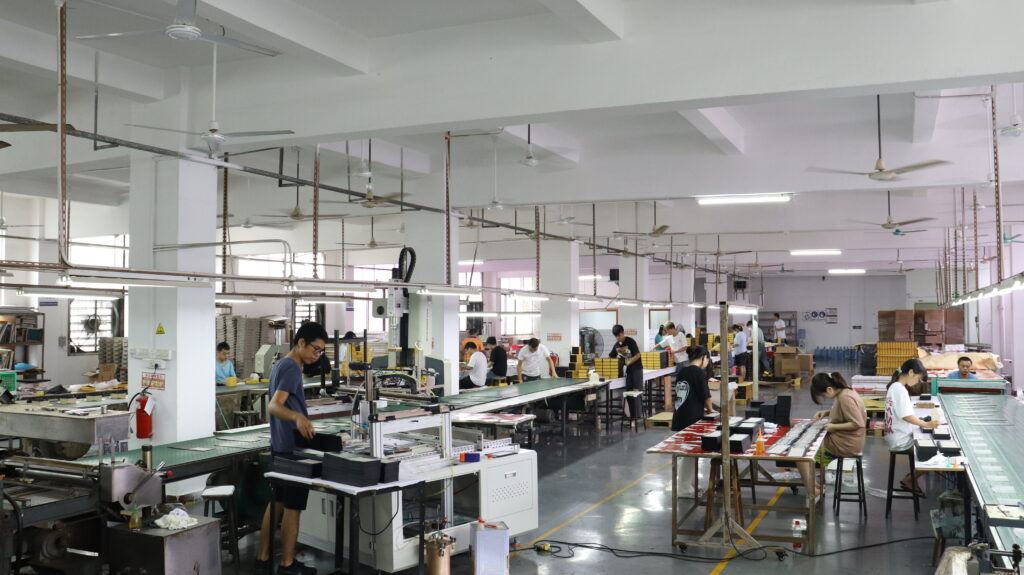
Repeatability is essential. Closures may become weakened or can contain openings that will allow less resistance due to dimensional tolerances that drift during production. The system is further compromised by the assembly inconsistencies, e.g the use of uneven adhesive application or inaccurate positioning of the inserts.
The issue of material stability is also important. Unstable materials can deteriorate with time or with different environmental conditions which influences the resistance durability. These issues can be avoided by using strong quality control gates, such as multi-stage inspection, tolerance check, and performance testing, to maintain the safety level at minimum.
| Manufacturing Factor | Safety Implication |
| Dimensional tolerance | Maintains precise access control |
| Assembly consistency | Ensures repeat performance across production runs |
| Material stability | Preserves resistance durability over time |
| QC checkpoints | Provides proactive risk prevention |
Why Design-Only Approaches Often Fail Child-Resistance Goals
Dwelling on the one hand only on aesthetics or a first sketch without any manufacturing intervention often results in exactly disappointing results.
- Aesthetic concerns may be insensitive to functional constraints meaning that the designs may in appearance be beautiful but when tested on their ability to resist the child they fail miserably.
- Child resistance should be built into the design at the inception level and not as an after-thought or drawn in concepts.
- The design / manufacturing review separation causes blind spots in design, the prototype can pass the early test but the manufacturing facts will add variables that harm the performance.
Common Misconceptions About Child-Resistant Vape Packaging
There are multiple common beliefs that undermine the work to have the actual safety.
- Cautions are sufficient -Labeling assists in providing adults with information, however it does not hinder a child to crack a container.
- Compliance would be ensured by one test – Single-sample testing would not take production variation or long-term wear into account.
- The effects of performance of any child-resistant packaging are similar: many packages are not consistent, different structures are used or the materials they use.
- Propaganda How design can overcome structural constraints Aesthetics can never cover bad engineering, or bad tolerances.
Conclusion — Child-Resistant Packaging Is About Long-Term Risk Prevention
Child-resistant packaging is not just a compliance layer, but it is actually a safeguard system that ensures the children do not suffer, the brands do not incur any avoidable liabilities, and that its operational stability is achieved through premeditated structural and manufacturing choices.
Through a risk-prevention focus instead of being responsive to governmental pressure when the product has already gone bad, one may develop stronger products and supply chains. There is anticipatory concern about the organization, stability, and quality management that provide reliability both to the safety standard as well as to real practice. vape packaging manufacturers.