
Soft touch lamination is a specialty film installed on print surface of packaging that provides a unique distinctions between itself and the typical finishes by being soft touch, rubberized in touch. It is usually used in higher-end and luxury packaging, turning a plain box or carton into something that becomes tactile and classy the minute one touches the package.
It is too easy to believe that soft touch lamination is nothing more than an aesthetic decision by many brands, when making it look fancy. Practically, however, it affects much more: it increases the resistance of fingerprints, provides a scratche-protective layer and is structurally active with other finishes such as embossing or foil stamping. Soft touch lamination adds value to the package in case of the alignment with brand positioning, selection of material, and precision of production.
Since I have work experience operating lamination lines in our plant, I have observed that only under selected conditions of substrate, design goal, and handling requirements can this finish be used to make a rigid gift box appear high-end to hold expensive cosmetics or electronics.
How Soft Touch Lamination Works
Soft touch lamination is not simply another overlay, but a thoughtful film bondage procedure that incorporates defensive and a distinctive touch layer.
The process begins with an offset printing process. Through a lamination machine, a thin, specialized film which is typically BOPP (biaxially oriented polypropylene) that contains soft-touch additives is fed. The film is bonded to the printed surface in a controlled pressure at a standard temperature of heat (usually 90 -110 C). After cooling, it forms slightly thicker of usual matte films, and with that characteristic smoothness of suede.
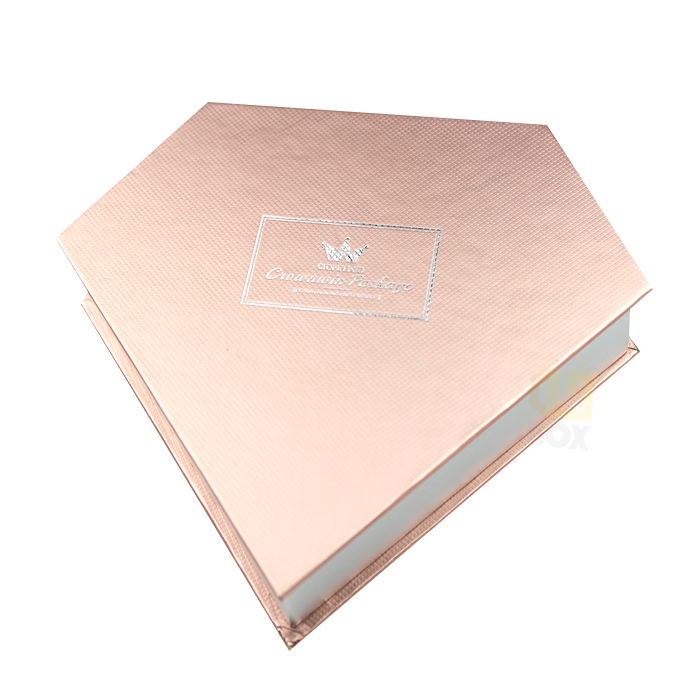
The main peculiarities are:
| Aspect | Soft Touch Lamination Characteristics |
| Finish | Velvety matte |
| Texture | Smooth, rubber-like |
| Application stage | After printing |
| Thickness | Slightly thicker than standard matte film |
| Durability | Moderate to high |
This is done by ensuring that the machine is well calibrated so as to prevent any forms of bubbles, wrinkles or uneven adhesion- problems that we have debugged over millions of runs on complex runs.
Soft Touch Lamination vs Matte Lamination
The ultimate confusion I have observed is that people use soft touch and matte lamination interchangeably. They are superficially similar in appearance, but drastically different in their feel, performance or use.
Standard matte lamination employs a non-reflective film that is flat and helps to reduce glare resulting in a clean and professional appearance. Soft touch goes a step further to include such a textured film which begs to be touched- adding depth to it that is unattainable by matte.
Following is an actual comparison based on actual production experience:
| Comparison Factor | Soft Touch Lamination | Matte Lamination |
| Surface feel | Velvety | Flat matte |
| Fingerprint resistance | High | Moderate |
| Cost | Higher | Lower |
| Premium perception | Strong | Standard |
| Durability | Slightly higher | Moderate |
Soft touch would frequently dominate in a luxury packaging lamination situation when a brand requires that unboxing experience, whereas in terms of cost-saving, matte will suit better.
When Should You Use Soft Touch Lamination?
Soft touch lamination impresses in a premium brand positioning that uses a physical touch point In fact, it is not an acid-test coating to be used on every project.
It works best on high-end cosmetics packaging, sense-making around luxury rigid box, luxury gift sets, and minimalist luxury objects, where the quality of the product is supported by the feel rather than actually shown.

Consider these scenarios:
| Packaging Scenario | Suitability |
| Luxury gift boxes | Excellent |
| Premium cosmetics | Very suitable |
| Mass retail cartons | Conditional |
| Budget packaging | Not recommended |
Mass-market or high-volume folding carton may have minimal to no benefit added except when the brand seeks a sensory differentiation advantage.
Material Compatibility and Structural Considerations
Soft touch lamination will react in a different way based on the base material- make this choice wrong and cracking, delamination or dull results are likely.
It adhesively bonds to both thin and thick rigid board quite effectively (e.g. 23mm of greyboard with printed paper), and here an increase in thickness builds up the strength of the structure. It is very reliable on folding cartons, but requires die-cutting very carefully to avoid stress at the edges.
Soft touch can enhance contrast with embossing or foil stamping: the velvety base swellings raise elements that are raised, and the swellings are felt as raised. Smoothness is however compromised on thin paper material or highly textured materials, and cracking along folds will be a very real issue unless the film is an exact match.
| Material Type | Performance with Soft Touch |
| Thick rigid board | Excellent |
| Folding carton | Good |
| Thin paper stock | Risk of cracking |
| Textured paper | Reduced smoothness |
We never run a sample on anything different in our production, but color appearance can change slightly too, colors with more tonal density beneath the film becoming richer.
Cost and Production Implications
In a factory mindset, soft touch lamination will add quantifiable processes and resources that will affect prices and timelines.
The dedicated film is more expensive than regular matte (usually 2040 percent higher per square meter) and the dedicated lamination pass will need to be configured, roller heating energy used, and operators needed to keep an eye on tension and temperature.
Lead times increase by 1-3 days over uncoated or basic matte runs particularly when the batch size is smaller and machine changeover swallows efficiency. Scalability is better at larger volumes- once operational output is predictable, but not good with exceptionally high turnaround or very low MOQ.
It is a matter of operations, where lower unit price goes hand in hand with much higher perceived value in high-end packaging finishing procedures.
Durability and Long-Term Performance
The real-life strength in handling is one of the best arguments to support the use of soft touch lamination.
The film layer also offers excellent resistance to scratches and scuffs during transportation, display in the retail store, or in hands-on use by consumers: compared to uncoated or simple matte, it is usually superior. One of them is fingerprint resistance, as boxes remain clean after numerous touches.
Sharp creases may wear with time on the edges example given that the board is not thick enough and the extreme humidity or changes in temperature will result in slight delamination unless the adhesives are of a high grade. In regime storage and normal e-commerce transport, however, it asserts well.
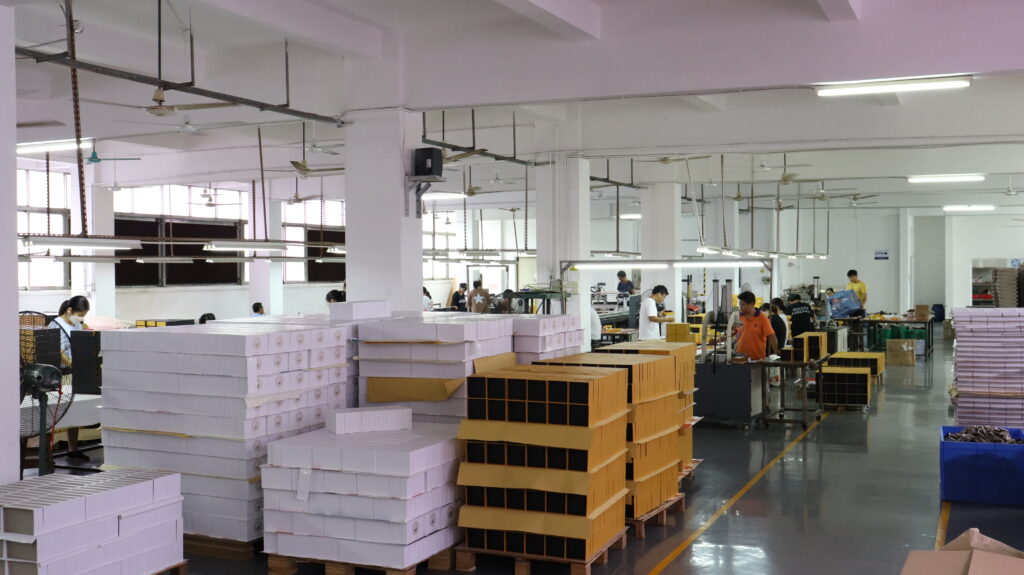
Our thousands of soft touch rigid boxes travel all over the world with little significant problems with the exceptions of huge complaints when used together with right inserts and outer boxes.
Common Mistakes When Using Soft Touch Lamination
Even well-seasoned teams can go wrong here are the traps I have seen many, many times:
- Using it on low-cost or bare sheet thin folding cartons where the stylish feel is lost and where the expenses exceed their advantages.
- Not considering the thickness of the substrate resulted in cracking along folds or edges of the assembly.
- To too many layers of finishing (heavy embossed and foil and spot UV and soft touch) that led to adhesion problems or visual congestion.
- Suppose it has removed every superficial injury–it is protective, but no good when subjected to sharp edges or abrasive manipulation.
It all lies in keeping expectations and production in line with the reality and not trends.
Conclusion — Soft Touch Lamination Is a Strategic Finishing Choice
The soft touch lamination provides maximum value when applied strategically, backed by the compatible materials, the right scale of production, and clear insight of the implications of tactile and durability of the product.
It is not in this case the best solution to all projects, but in those situations, when it meets brand objectives and manufacturing limitations, it results in packaging with improved characteristics of being not what the customers see, but what they touch and retain. In luxury applications, that minor dissimilarity will frequently compensate the investment in perception and durability.