
Die cutting is an accuracy cutting technique that is applied to cut packages made of paperboard, corrugated board, and other requirements form into boxes, cartons and other structures. It includes specially-designed dies which cut, as well as crease and score the material producing lines to which the folding and assembly can be completed. This will result in direct impact on the final structural integrity and folding accuracy of the final package so that components will interlock in the packaging process without creating gaps or misfits.
Most brands presume that die cutting is merely a minute trimming procedure but in reality it defines how the packaging folds, locks, and assembles when it is made at large. Die cutting does not entail just simply cutting paper to shape, it is an operation in structural engineering which decides the degree of accuracy of packaging, assemblage security, and scalability of production. Precision in die cutting is the key element in structural consistency of packaging, efficiency in production and future quality control.
What Is Die Cutting in Packaging?
Die cutting is the first process used in the modeling of raw materials into functional packaging designs. Die cutting in the context of packaging manufacturing involves sharp steel blades to be used in a specific arrangement to slice, crease and punch holes on paperboard, corrugated board or rigid box wrapping paper. This forms the outline and fold lines that can be used in constructing boxes, inserts or cartons.
The main difference between cutting and creasing is the fact that the first one cuts a material in two and the second one squeezes the material to create a hinge-like fold without breaking the surface. There can also be scoring on partial cuts which permit controlled tearing. Custom packaging structures require these operations since they determine the conversion of the flat sheet to three-dimensional form, which influences the dimensional accuracy to load carrying capacity.
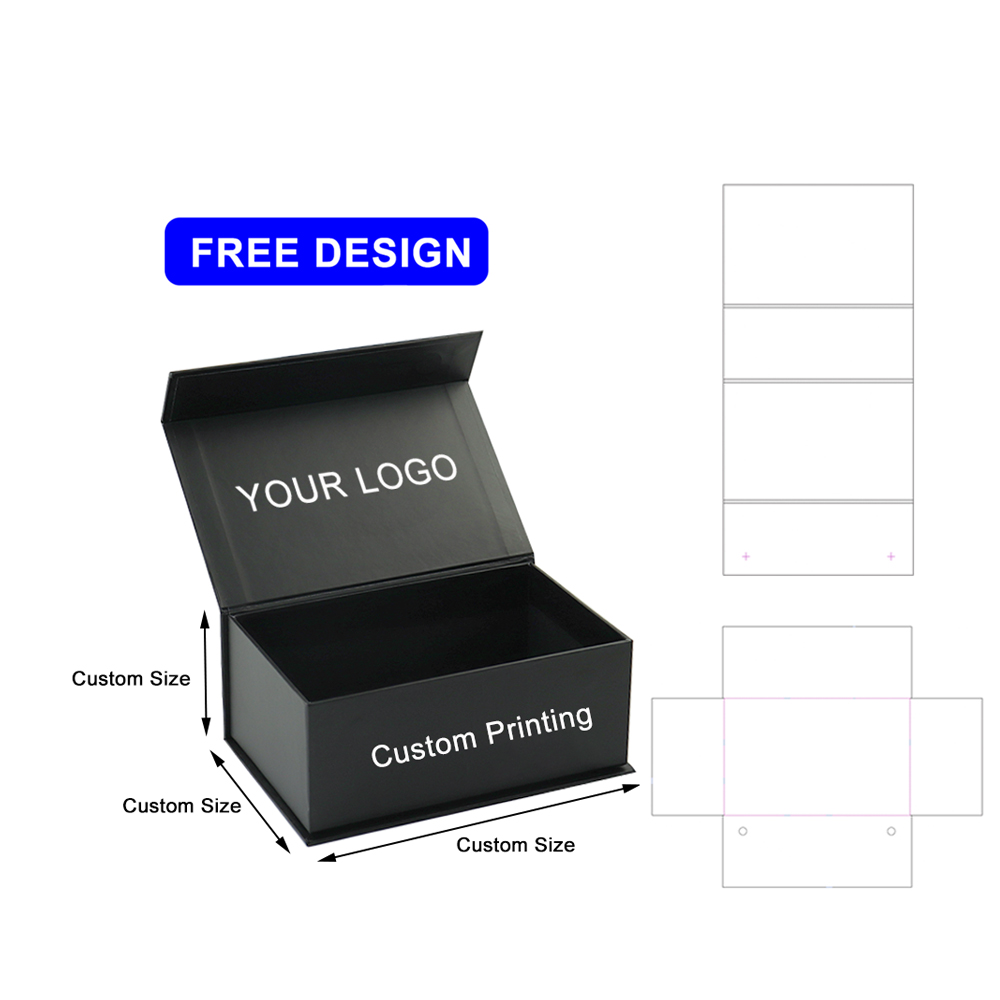
| Aspect | Die Cutting Characteristics | Function |
| Cutting and creasing material | Paperboard, corrugated board, wrapping paper | Shapes and prepares for folding |
| Tool | Steel rule die | Custom blade arrangement for precision |
| Precision level | High | Ensures tight tolerances in structures |
| Best for | Custom structural packaging | Enables complex designs like interlocking tabs |
| Scalability | Suitable for mass production | Supports high-volume runs with consistent results |
How Does the Die Cutting Process Work?
Die cutting is a systematic process of packaging where designs are changed into the accurate shape of materials. The initial one is structural planning and the final one is quality verification that ensures that all sheets are in conformance with the engineering requirements.
Step 1: Die Line Design
This is the first step where a structural drawing or die line is drawn as it represents all cuts, creases and scores. CAD software is used by engineers to lay out the layout taking into consideration material thickness and fold allowance to avoid problems such as cracking or misfolding.
Step 2: Steel Rule Die Fabrication
A die with a die line is made by cutting and crushing sharp steel blades into a base made of wood or composite and completing by bending a steel rule die. These blades are interspersed to be perfectly aligned in design with different heights on cutting and creasing.
Step 3: Material Placement
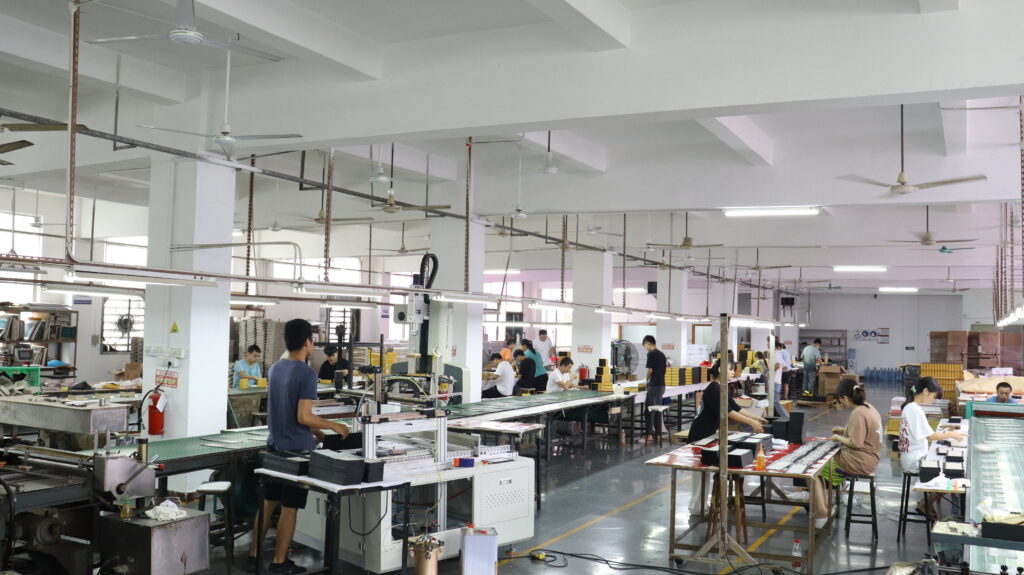
The material is wound into sheets through the die cutting press where there is strict alignment to eliminate offsets. The die and material marks are registered so that they align in subsequent sheets.
Step 4: Press Cutting and Creasing
The press is made to give the material pressure that is controlled by the die. Cuts are made through to the full, and creases squeeze the fibres to form line of folds. In this step, material properties have to be calibrated.
Step 5: Waste Removal and Sheet Separation
Following pressing, surplus material (waste) is peeled off after which individual pieces are extracted. The waste can be ejected by automated systems, but the clean edges and correct dimensions should be checked by hand.
| Step | Description |
| Die line design | Structural layout creation using CAD for cuts and folds |
| Die production | Steel blades formed into shape and mounted on a base |
| Press setup | Alignment and calibration of material and die |
| Cutting process | Material pressed against die for cutting and creasing |
| Quality check | Structural accuracy inspection for tolerances and defects |
Types of Die Cutting Used in Packaging
Various die cutting and cutting processes can be applied to address diverse production requirements, and this balances production requirements (speed, precision and volume) in the packaging engineering. An example is flatbed die cutting which is more versatile when dealing with medium-runs and others are interested in efficiency or prototyping.
| Type | Best For | Volume Suitability | Cost Level |
| Flatbed | Rigid and folding cartons | Medium–high | Moderate |
| Rotary | Corrugated packaging | High volume | Efficient |
| Digital | Sampling and short runs | Low volume | Higher per unit |
Flatbed Die Cutting
This is a stamping technique that involves a flat die attached to the substance and pressed in a stamping-like motion, it is suitable when cutting a die that severely requires specificity, such as in custom packaging.
Rotary Die Cutting
Rotary cutting is better in high speed production of corrugated boxes and other products that are made in constant rotation to minimize idle time between sheets, since the production process uses cylindrical dies.
Digital Die Cutting
Digital processes Digital systems will be used well in prototypes or small lots of laser or blade-based processes, and allow rapid changes in packaging die line configuration.
Why Die Line Engineering Matters
Die line engineering is the design of a winning die cutting that directly affects the dependability of the assembly of the packaging. Folding lines ensure that the panels fold correctly, should there be mechanisms to hold the panels such as glue tabs or interlocking slots without the need to force or have gaps.
Bad die lines may cause assembly inefficiency e.g. folded edges which have to be refixed or jam in automated lines. Control of structural tolerance is critical at this point, since even small variations increase in mass production, stack strength and transit life. In the engineering of structural packaging, the focus on minimizing waste by taking care of the die line precision leads to a general state of increased consistency.
Cost and Production Implications
The upfront investments and operational variables determine the die cutting costs and hence its feasibility in large scale production. Initial die tooling, such as, is a fixed cost that becomes apportioned on large quantities.
The durability of the steel rule dies, which lasts usually thousands of impressions, aids in controlling the constant costs, but complexity of the designs increases the cost of fabrication. At the scale, greater quantities of production form a diminishing per unit pricing, thus die cutting is cost-effective when it comes to custom production of large quantities. Nevertheless, the complex designs will require extended design time, which may cost more labor and materials.
| Cost Factor | Impact |
| Die complexity | Higher tooling cost due to detailed blade arrangements |
| Material thickness | Affects pressure settings and potential for blade wear |
| Production volume | Reduces per-unit cost through economies of scale |
| Structural detail | Increases setup precision needs and calibration time |
Material Compatibility and Precision Control
The critical components in attaining clean results during the die cutting process packaging are the material selection as well as calibration. Die set matching Paper thickness Deathers must be thicker creases to delve into boards, and need less force to delve into thinner boards, or are likely to over-compression.
Crease depth calibration eliminates cracking, particularly in coated or laminated materials in which the integrity of the surface is important. The presence of such risks as fiber delamination in case of either pressure being uneven gives an incentive to controlling the alignment. Practically, compatibility is guaranteed through testing of the samples, and therefore, it is preserved with different batches.
Common Mistakes in Die Cutting Planning
There are a number of flaws in die cutting planning that can destroy structural deliverables and manufacturing processes. Earlier takes care of these expensive revisions.
- Failure to understand die line accuracy: Minor errors in measurement cause folds to be misaligned which influences assembly and assembly.
- Disregards grain direction of material: Folding with material grain augments the danger of cracking through chipping of alternating grain, thus, decreasing monotony.
- Complexifying locking structures: Additional tabs or slots can increase die complexity, but do not contribute functional value to the design and increase costs.
- Selecting digital cutting as a possible method of mass production: Although this method is appropriate in the creation of a prototype, it is not the most efficient to be used in large production volumes.
Conclusion — Die Cutting Is Structural Engineering, Not Just Cutting
Good die cutting, wisdom in die line engineering, and alignment in production bring about good packaging structures. Popularly used as a structural event, and not as a trimming event, die cutting provides uniformity of the packaging, assembly effectiveness, and sustainability in manufacturing processes. This method promotes scalable manufacturing, in which accuracy in each cut and crease helps in high quality reproducibility with each manufacturing cycle.