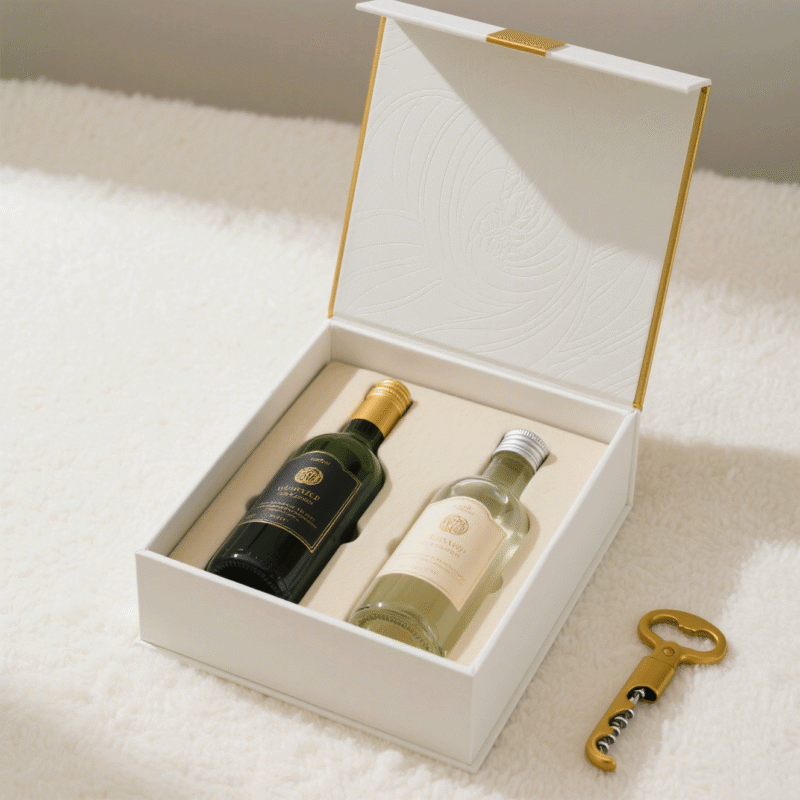
Both the rigid boxes and the magnetic closure boxes are quite common in the packaging of wine but the boxes have totally different purpose in the package structure as well as branding. Most wine brands are defaulting on magnetic boxes because they automatically indicate a high end product and the truth here is more subtle, namely structural rigidity, specific insert design, and general compression strength is of great concern in being able to hold heavy and sensitive glass wine bottles safely.
Choosing the improperly chosen structure often leads to increased breakage throughout transit, unequal unboxing experience in all batches, or destroyed brand loyalty when the bottles arrive broken. Not appearance, but the combination of protection of the bottle, presentation of the brand, logistic performance, consistency of the manufacturing makes the right wine packaging structure.
Why Packaging Structure Is a Strategic Decision for Wine Brands
Wine brands do not simply need a container to package the wine, it is in fact a structural investment that has a direct impact on perceived value, customer satisfaction, and operational expenses.
The bottles of wine are fragile, and heavy (usually weigh 1.2-1.5 kg each), and the shipment of the bottles is sensitive to the changes in impact, vibration, and pressure. Substandard decision making causes cracked corks, leaking wine or complete breakage and this translates to damage claims, return, and loss of confidence by the retailer. Where several handoffs may be required in the export markets and in other instances, it may be the trucks, planes, or sea containers that the packaging must meet real-life stresses of stacking and handling in stacks.
Unreliable structure between the production runs can also compromise brand reliability: one lot of product feels solid and high-end, the other one will feel flimsy with just a few differences in the assembly or alignment of the materials.
This is a brief summary of major factors:
| Packaging Factor | Impact on Wine Brands |
| Structural strength | Bottle protection and reduced breakage |
| Opening mechanism | Unboxing experience and perceived quality |
| Insert precision | Bottle stability during transport |
| Material durability | Suitability for export and long-distance shipping |
| Structural consistency | Brand reliability across batches |
Understanding the Structural Differences: Rigid Boxes vs Magnetic Boxes
The essence of the difference between them points to building and the way each of the buildings is treated with loading and closing.
A standard rigid box (also known as setup box or rigid gift box) is a thickchipboard or grayboard, wrapped in specialty paper or leatherette. The walls are also hard and self-standing and do not need to be folded after manufacture. Lid Designs in most cases remove fully or have a small hinge and the box has high tolerances and robust inserts to provide security to bottles.
Magnetic closure boxes are constructed on rigid board too but have a hinged lid (typically book-shaped), with internal magnets of neodymium to provide a pleasing feeling of a SNAP close. This is smooth and high-end, yet the hinge and the position of the magnet create some variables, which may negatively impact the overall compression capacity unless designed flawlessly.
They each have distinct advantages and disadvantages in wine applications.
| Structure Type | Key Characteristics | Common Use Cases |
| Rigid box | Fully enclosed, high compression strength, no moving parts | Export wine, heavy bottles, bulk shipping |
| Magnetic box | Hinged lid with magnetic closure, premium tactile feel | Retail display, premium gifting, single-bottle presentation |
(For brands exploring structural wine packaging options, see our guide to custom wine packaging boxes.)
How Structure Affects Bottle Protection and Logistics Performance
The packaging of wine bottles has to be robust enough to resist vertical compression (when stacked in pallets), and lateral impacts (drops or knocks), vibration (long-haul transportation).
Rigid boxes shine in this since the reason is the even distribution of pressure the thick walls of the rigid boxes have on the entire surface. When mounted with tailored molded pulp, EVA foam or sponge inserts which fit around the neck of the bottle and to the base, they ensure little movement and have the potential to absorb shocks well. In standards of drop testing and ISTA simulation, engineered rigid designs always have reduced glass container failure rates.
Magnetic boxes can also work but are more struggle-dependent: the hinge and the places of closing form places of potential weak areas when operating with heavy stacking. Magnets begin to align improperly during assembly or the lid is not reinforced whatsoever compression strength will be greatly reduced and becomes dangerous during international freight. Shelving store failures occur almost never – they occur in the warehouses, sorting zones or cargo holds.
Rigid Box vs Magnetic Box: Practical Comparison for Wine Packaging
In the case of wine alone, the contrast is more obvious on a pragmatic basis.
| Evaluation Criteria | Rigid Box | Magnetic Box |
| Structural strength | High | Medium |
| Bottle protection | Excellent | Good (insert-dependent) |
| Opening experience | Traditional, secure | Premium, gift-oriented |
| Suitability for export | Very suitable | Limited without reinforcement |
| Production consistency | High | Depends on magnet alignment |
| Cost stability | Predictable | Slightly higher |
Brand Positioning: When Each Structure Makes Sense
Rigid boxes are best suited to those brands that have been focusing on reliability, export-ability, and low quality – imagine old wineries that are exporting to wholesalers in North America, Europe, or Australia. They communicate both longevity and reliability without involving any superficial mechanics, and thus are perfectly suitable in a situation where it is the bottle itself that is a hero.
Magnetic boxes are popular in the direct-to-consumer gift market, as a limited run, or in retail store displays where the unboxing experience is a key factor. Esquisite unveiling and satisfying closure gives a feeling of perceived luxury, particularly in the case of a corporate gift or a holiday promotion.
Most established brands carry both: flexible core export lines and magnetic high-quality DTC or seasonal SKUs so that there is core positioning by channel and overall identity is not lost.
Manufacturing Consistency and Quality Control Considerations
In actual manufacturing, structural consistency makes the distinction between suppliers who are reliable and those who can perform in a high sample but fail at scale.
Rigid boxes enjoy the advantage of assembly being simpler: the small number of variables result in reducing tolerances with each batch. Magnetic boxes need to be adeptly sculpted regarding the size of the magnets used, using the hinges, and the synchrony of the lids – otherwise it will result into improper closures, rattling lids, and unequal strength in the snaps. We have been experiencing a substantial percentage of magnet-associated and quality complains in the high-end gift packaging.
The mere fact that a single prototype deals with the question of how the manual or semi-automated lines treat volume, is insufficient. Not mere visual attractiveness, but real consistency is realized through die-cutting, gluing, magnet insertion and multi-level quality control being done in-house.
Common Mistakes Brands Make When Choosing Wine Packaging Structure
The wine brands tend to succumb to the following traps:
- A focus on looks over safety of the bottle – the desire to have a wow unboxing moment and overvaluing the dangers of transit.
- Disregarding bottle weight and shipment conditions – supposedly, retail presentation requirements are the same as ocean freight requirements.
- The perception of magnetic boxes being necessarily of higher quality all the time – neglecting the idea that protection and consistency are the real qualities of premium quality.
- Judging the suppliers based on a sample, rather than their production capacity – pretty mockups are not a guarantee that they will revert to the same alignment of the magnets and precise insertion at the 5,000 or more units scale.
Conclusion — The Best Wine Packaging Structure Is a Balanced Decision
Finally, when deciding between the use of rigid boxes and magnetic boxes to package wines, one needs to make decisions that correspond with structural integrity, branding objectives, logistics, and manufacturing reliability.Insurance on transit, similar appearance across the orders, and less likelihood of damage are more important than short-term aesthetic value. Wine packaging choices work because of their combination comprising of structure, custom inserts, shipping requirements, and production controls rather than appeals.