Introduction
Did you realize that consumers report that packaging design directly influences their purchase decision when buying coffee by 73 percent? It is not just about making a good coffee in the current coffee market with thousands of new coffee brands produced annually, it is also about making sure that your product stands out amongst hundreds of virtually identical bags and boxes in the brick-and-mortar and virtual shelves.
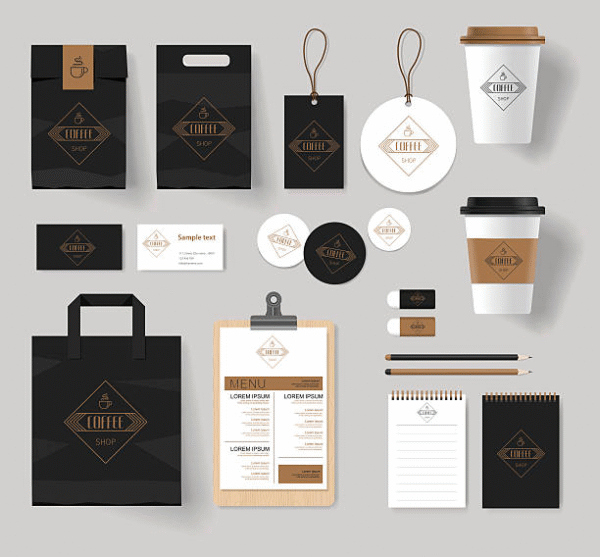
The problem is quite clear: the number of coffee brands that get lost in the crowd, with the assistance of the generic packaging in which the unique story or value proposition is not published, is quite high. The majority of coffee packaging appearances are interchangeable, be it the brown kraft paper image or the drab type.
But here is the guarantee: in this post, you will discover five real coffee packaging design examples that cut through the noise and yield measurable results. Better still, you too will receive hands-on lessons that you can immediately apply to your own packaging strategy, even after you are out of a large budget and even when you have a small brand.
What Makes Coffee Packaging Effective
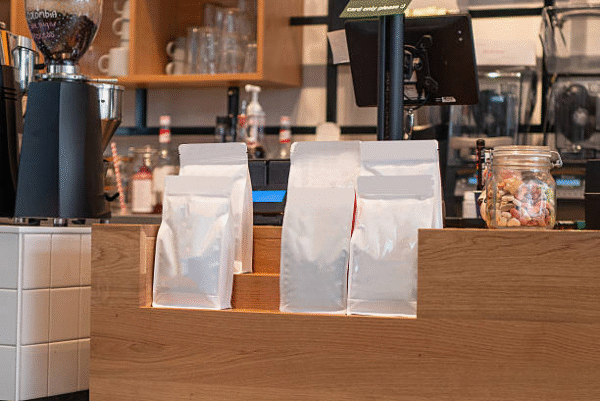
It is important to grasp the underlying factors that render coffee packaging really efficient in the contemporary competitive environment before delving into the particular examples.
Brand Identity as Your Foundation. Your package is your silent salesperson and the components of brand identity, logo, color palette, and typography are the words it talks. Good coffee packaging will create an instant brand recognition with the assistance of the standard visual language. The logo need not be fancy but must be easily remembered and easily adapted to the different packaging styles. The psychology of colors is particularly important when it comes to coffee packaging, since the warm tones of the earth color could be related to comfort and tradition, whereas bright colors in contrast could be related to innovation and energy.
Managing to be Noticed Among So Many Cans. The same way that rivals fight to be recognized in a grocery store aisle or an Internet product grid, good coffee packaging should do what designers call a shelf impact. This implies that your design must be recognizable and attractive at least 3 feet high in the physical retail, and something worth stopping the scroll online. The most effective designs do this using negative space in strategic use, or large typography or by using unexpected material choices and make them tactile.
Emotional Connection and Storytelling Coffee is a product that is emotional in nature- it is linked to everyday experiences, social life, and culture. These emotions are the highest emotions that can be exploited by the most desirable packaging designs by telling the authentic story. This may include the story of how the coffee is made, praising the farming fraternity, or relating to the lifestyle ambitions of the customers. Specifically, cultural authenticity is extremely appealing, be it by using traditional patterns of the country of origin of the coffee or adhering to the local culture in which the coffee is served.
Functionality Meets Sustainability. Contemporary consumers, particularly of the coffee category, are highly concerned with sustainability. Good packaging combines both product safety and eco-friendly packaging. This involves looking at the lifecycle as a whole- production and shipping, disposal, or recycling. Also, such factors as user experience, resealable closures, easy-pour spouts, or stackable designs can largely impact repeat buying.
Five Inspiring Coffee Packaging Designs
1. Onyx Coffee Lab – Geometry Series
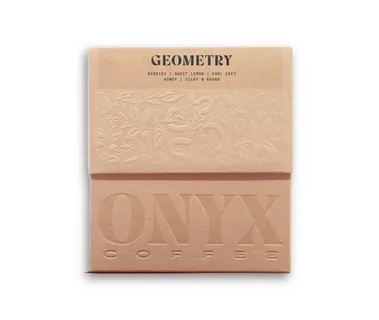
Brand Background: Onyx Coffee Lab is a specialty coffee roaster with its headquarters in Arkansas, which has earned an image of transparency and close relations to farmers. They are both scientifically precise but artistically presented.
Design Idea and Beauty: The Geometry Series has bold and geometric patterns in rich colorings– consider deep blues and bright oranges, forest greens with golden yellows. The coffee origin receives its own geometry, which is screen printed on a bag in matte finish. It has a clean and modern typography, and the information on the processing of the coffee is brought out prominently in a grid format.
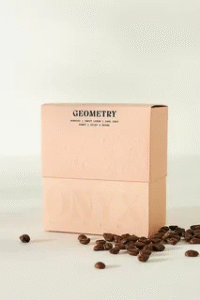
What is Special: The design system is artistic and functional. All the geometric designs are in fact, inspired by the topography of the area where the coffee was grown, and therefore, the visual elements are not just decorative. The color schemes are surprising, as coffee packaging, not use the conventional brown and beige color scheme.
Issues and Resolutions: The greatest issue of production that came about was the ability to sustain the color throughout the various printing runs, and the cost factor was also reasonable, considering the operation of a specialty roaster. They addressed this by collaborating with a printer with expertise in screen printing and having stringent color-matching procedures. The selected matte finish material had to be tested to make sure that it would not affect the barrier properties of the bag to keep the coffee fresh.
Lessons & Takeaways: bold color decisions can be used to distinguish your brand when put into action across the entire line. The design can be made to accommodate educational aspects (such as processing information) without reducing the beauty. Above all, visual components must be meaningful- consumers like truthfulness and narrative.
2. Blue Bottle Coffee – Minimalist Mastery
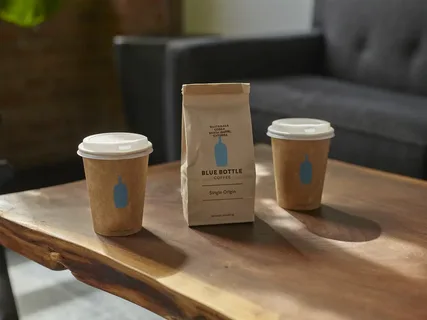
Brand History: Blue Bottle Coffee was the first coffee shop to introduce the third-wave coffee culture to the United States, focusing on the quality of artisanal and curated experience. They present coffee more like wine, which is more about origin, processing technique, and notes of taste.
Design Idea and Beauty: The packaging of Blue Bottle reflects the elegant minimalism. Their unique logo is placed on clean and white bags with very little typography in an exclusive, customary sans-serif font. Product details are in a hierarchy with the name of the coffee being the most important, then there is the origin details that are in smaller fonts with the addition of tasting notes. The blue color itself is only a result of a small accent on the color, mostly a single line or dot.
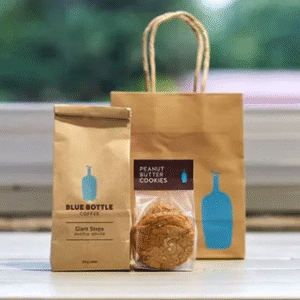
What Makes It Special: Compared to other brands in this category, full of busy information-packed packaging, the simplicity of Blue Bottle is astonishing. The bags are almost glowing on dark coffee shop shelves; this is because of the white background generating instant visual contrast. They go to the extent of their minimalism being evidenced by them having only one bag design template that cuts across all varieties of coffee, which builds strong brand cohesiveness.
Difficulties and Solutions: White packaging exposes all scratches and prints, and needs high-quality material and special attention all along the supply chain. They invested in quality paper stocks that are protective coated. This spare style also implied that everything had to be flawless– there was no place to hide behind wallpaper designs in case the typography or layout was out.
Lessons & Takeaways: Sometimes, less is more, particularly in a saturated category. Unity in product lines creates stronger brand recognition as compared to separate product differentiation. High-quality inputs can be used to justify the high costs, provided they are in tandem with brand positioning. The white space is a luxury that is an indicator of quality and confidence.
3. Brandmania – Cultural Heritage Integration
Brand Background: Brandmania is an example of a Turkish coffee roaster, as the company had an interest in both respecting the traditional Turkish coffee culture and attracting modern consumers. Their problem was to honor tradition and still not to have cliche or touristy versions.
Design Idea and Beauty: The design of the packaging is very complex, with a geometrical shape being inspired by early Turkish fabrics and buildings, painted in an elegant color scheme of dark burgundy, gold, and blue. They are foil-stamped on textured paper and give a sense of texture. Typography, the brand name is made up of custom Arabic-inspired script, and the product information is made up of clean Latin letters.
What Makes It Unique: The design is based on textile patterns that were used in the Turkish weaving traditions, instead of featuring cultural elements that are rather obvious. The traditions are rethought and viewed through a modern prism, which makes them original and modern. The products within the line have variations in the patterns, but resemble each other, as these are family products.
Obstacles & Remedies: Foil stamping complex designs took a lot of testing in order to ensure finelines would not be lost during manufacturing. In conjunction with their printer, they optimized the complexity of patterns to be foil-stamped. Cultural authenticity also demanded study and consultation with textile historians to make sure that patterns were applied respectfully and correctly.
Lessons/takeaways: Culture would make a great differentiation when applied carefully and naturally. Finishing effects, such as foil stamping, can be considered luxurious and can add value to the design concept when the effects are part of it. The presence of texture and tactile features generates unboxing experiences that make consumers socialize.
4. Oatly (Coffee Collaboration Series) – Sustainability First
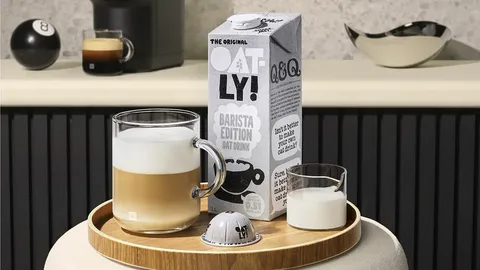
Brand Background: Although oat milk is a well-known brand, the partnership with other coffee roasters made Oatly design packaging that had to reflect both brands and focus on the importance of being environmentally responsible, which is one of the values of both companies.
Design Concept and Aesthetic: The package is made of 100 percent recycled kraft paper and water-based printing. Its design is planned to be rough and organic, with hand-drawn illustrations and the appearance of imperfect typography that would appear as nearly stamped or stenciled. The color is mostly earth tones with a few pops of the blue color of Oatly used as accents.
What’s Unique: The so-called imperfect aesthetic actually involved a lot of artistry to do it well–to make something look casual as hand-drawn but in a way that is readable and that is attractive. The sustainability message is not only stated in the written text but is built into the visual image. Even the mistakes of typography seem purposeful and contribute to personality.
Difficulties and resolutions: Recycled materials may be of uneven color and texture, and the quality of printing may be random. They addressed this by accepting the differences as the design narrative, even marketing the fact that there are no two packages that look the same. Inks based on water had to be modified to produce saturation of colors on the recycled material.
Lessons/ Takeaways: Design constraints on sustainability can be turned into features of the design. In classes where smooth designs are the order of the day, imperfection may serve as a distinguishing factor. The selection of material must be in line with brand values, although it might pose production problems. The JV packaging should have well well-defined hierarchy to prevent confusion of consumers regarding the main brand.
5. Intelligentsia Coffee – Typography-Driven Excellence
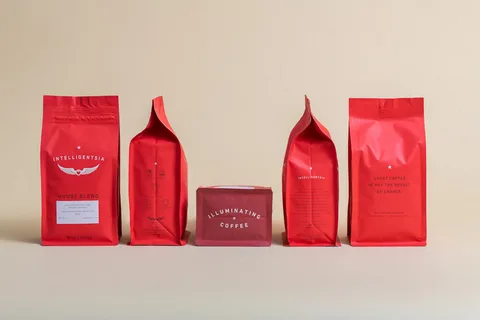
Brand History: As one of the first companies to establish direct trade relationships, Intelligentsia Coffee required a package that would convey their experience and friendliness. Being a brand used by professionals in the coffee industry as well as domestic consumers, their packaging had to be effective in a variety of touchpoints.
Design Concept and Aesthetic: The design has a typography-centered approach with unique letterforms and an advanced information hierarchy. They treat each coffee individually in its own color scheme, although in a unified system of low-key, elegant colors. The design is editorial, like pages in a well-designed magazine, with a lot of white space and well-planned proportions.
What is Special: The typography system is exceedingly versatile, with a lot of information about products that does not come out cluttered. The use of different typefaces is done strategically, such as serif fonts to use on the coffee names to make them lively, and to use the sans serif fonts on the technical information because it is easier to read such fonts. The color code is systematic and expressive, and each source influences the colors of a particular landscape.
Challenges and Solutions: Designing a bespoke typography system required a lot of external initial investment in design development. They collaborated with a type designer to design letterforms, which could be used at varying sizes and uses. The color system needed extensive brand rules and training of printers in order to manage the color system between seasonal products.
Lessons & Takeaways: The typography can also serve as the design in cases where other factors are weak. Differentiation is achieved through custom letterforms, and this cannot be performed well without budget and expertise. Flexible design systems are required when the product lines of the brand are varied. With a properly planned hierarchy, educational content can be easily incorporated into the design of packaging.
Common Threads Among Top Coffee Packaging Designs
Regardless of the aesthetic differences of their approaches, the successful coffee packaging designs have a few traits in common, which do not rely on the taste the style.
Unified Brand identity in all the Touchpoints. Each of the examples has a consistent visual language when you see the brand in the shelf of a coffee shop, in an online shop, or on social media. This consistency is not limited to the same logo, but rather to the same distance between objects, color interaction, typography hierarchy, and even the photo style. Companies that are able to do this sort of consistency normally invest in whole brand guidelines that define how to use the elements in various ways.
Balanced Strategy of Visual appeal and Information hierarchy. Coffee drinkers require a lot of information- where it was coffee, date of roast, tasting notes, brewing suggestions, but good designs never allow information to override the visual appeal. The most notable instances establish proper hierarchy by the size, color, and location of the required information so that the main facts are always available at first sight, whereas additional ones can be found by interested consumers.
True Fidelity to Target Audience Reality: Sustainability, craftsmanship, convenience, or cultural heritage. Both understated and overstated coffee packaging have to be true to the brand narrative and the values and priorities of the target audience. This congruence extends beyond the superficial aesthetics to material decisions and production techniques, as well as pricing policies. Brands attempting to attract everyone usually end up attracting no one.
Growingly More Advanced Sustainability Approach. Sustainability is no longer seen as a nice idea, but a necessity in business; how successful a company has been in adopting sustainability as part of its design narrative, though, is what has become the successful response to environmental responsibility. This could be to select materials that in fact enhance the design aesthetics or make visible and touchable by the consumers the environmental benefits.
How to Apply These Ideas to Your Own Coffee Packaging
Begin with Your Brand Foundation. You do not want to think about any visual elements before you deliberately define what your coffee is about. Do you have personal contacts with farmers? Your new methods of roasting? Connection with the local community? The packaging that you have should be a visual representation of these differentiating factors. Formulate a one-sentence brand promise and filter all decisions on design.
Select Materials that tell your story. Your material choices must be able to strengthen your brand position, and not get in its way. The high-quality positioning may require more paper stocks, special finishes, or unique structural designs. Positioning of value may focus on efficiency and the usefulness of materials. Sustainable brands must make sure that their material selections are in line with environmental assertions. Always weigh aspirations with financial realities–it is better to do simpler materials well than to cut corners to do high-quality materials.
Color and Imagery as a Means of Communication Color is not a form of decoration–it is communication. The warm earth colors may refer to the conventional roasting, or creation myth, though the bright and unforeseen colors may refer to innovation and vigor. The brand story should be served up by imagery, be it photography of farmers, drawings of how it was brewed, or abstract patterns that evoke a mood. Do not use imagery without a point or to distinguish your brand.
Test in Real Situ Prototypes that seem to perform well on the screen do not necessarily perform well in the real world. Test models in print and test them on real shelves, under varying light conditions, and over varying distances. Evaluate the functionality of the design in e-commerce thumbnails and posts on social media. Get responses not only from other designers or internal stakeholders, but actual customers.
Focus on Beautiful Packaging. Beautiful packaging that does not ensure the product is protected, nor will there be a good user experience, will fail in the end. Think in terms of the complete customer experience – starting with first impressions to day to day activities, to disposal. Purchase and repurchase could be influenced by easy-open features, resealable tops, clear brewing directions, and easily stackable designs.
Conclusion
The design of a coffee packaging must be capable of meeting several priorities at the same time, including brand differentiation, communication to consumers, functionality, and budget imperatives, and remain true to your distinct value proposition.