Picture this: it’s a long-awaited weekend night, and you’ve just ordered your favorite pizza, but when it arrives, the cheese is melted to one corner, and the toppings are all over the box. Or maybe the pizza is packed away in a container that is too big and is already cold, with all that space between the pizza. The frustrating situations described occur more frequently than you may think, and each of them can be linked to one important thing: the size of the pizza box.
It is not merely an issue of appropriacy of the size of pizza box but it is also freshness, professional appearance, logistics of delivery, cost management, and even brand image. Many different people may use this detailed guide, as well as people who are merely interested in the science of cardboard boxes, to learn about standard sizes of pizza boxes, the way to choose the right one in case of different kinds of pizzas, and the professional tips on how to use these facts to their advantage in packaging.
What Are Standard Pizza Box Sizes & Dimensions
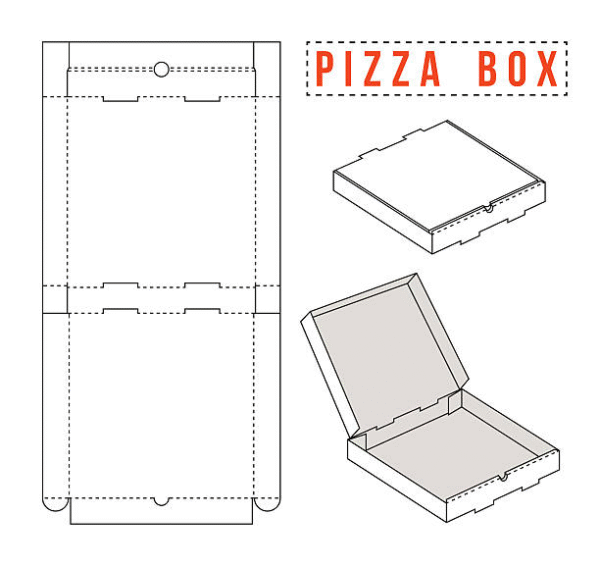
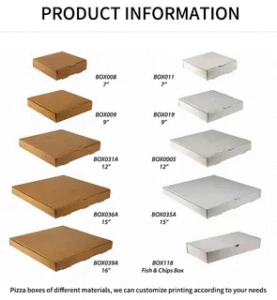
The knowledge of typical dimensions of pizza boxes is something a person in the food service industry has to know. The most typical sizes that you’ll come across are as follows:
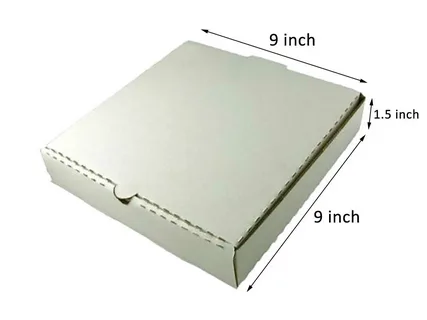
Small Pizza Boxes: The small ones are 10 x 10 x 1.5 inch boxes (25.4 x 25.4 x 3.8 cm) that hold the personal-sized pizzas with an 8 to 10 inch diameter. They are ideal with individual portions and lunch specials.
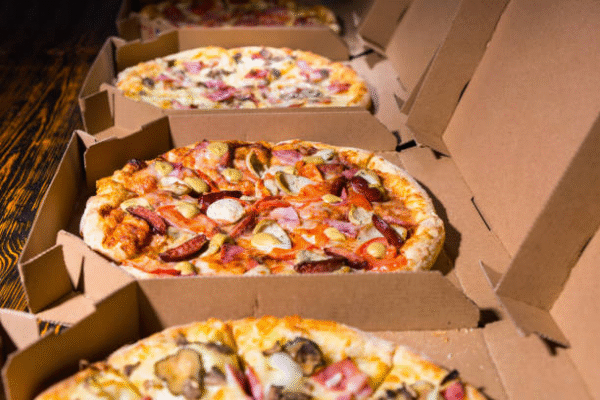
Medium Pizza Boxes: The medium boxes are 12 x 12 x 1.75 (30.5 x 30.5 x 4.4 cm) in size; they are used with 10 to 12-inch pizzas. This is the size of a small family or couple who are having a meal.
Large Pizza Boxes: These containers are 14 x 14 x 2 inches (35.6 x 35.6 x 5.1 cm) and are used in storing pizzas and range between 12 and 14 inches in diameter. They are the most preferred in family dinners and in orders in groups.
Extra-Large/Family Pizza Boxes: These are large boxes, 16″ x 16 x 2.25 (40.6 x 40.6 x 5.7 cm) or even 18×18 x 2.5″ (45.7 x 45.7 x 6.4 cm), and are used to carry the largest pizzas, 16 to 18 inches in diameter, and are ideal when you feed a crowd.
The measurements of height are especially crucial when working with crusts that are thick or loaded with toppings because the lack of the required depth may squeeze the pizza and spoil the look and flavor.
Pizza Box vs Pizza Size: Getting the Perfect Match
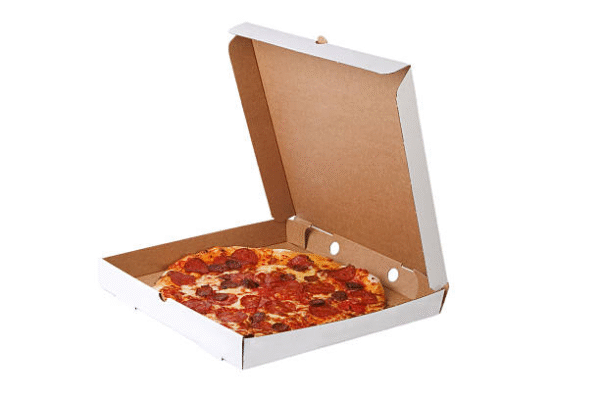
To obtain the best fit between pizza and the box, one needs to have an appreciation of the dilemma of clearance space. As a rule, you would want about 0.5 -1 inch of spacing on all sides between the box wall and the edge of the pizza. This clearance can be used to achieve several functions: to avoid sticking to the box sides, to permit a slight thermal expansion, and to provide a buffer to brief handling motions during the delivery.
There are several problems in case the fit is too tight. Cheese and toppings can be put on the box walls in such a manner that will be messy to see when opened. Pizza can also be compacted during stacking and this affects structural integrity of the pizza. The same applies to when the boxes are too large as the pizzas slide and therefore toppings are not in place hence displaying an ugly picture.
This is evident in cases where a 12-inch pizza is expected to fit in a 13-inch box, yet this will provide that half-inch difference that is required. In most cases, 16-inch boxes are used as a form of security since most of the establishments serve 14-inch pizzas that can fit in a 16-inch box. The gimmick is in consistency–whatever margin you are embracing should be applied to the sizes of your pizzas to maintain the quality levels.
Variations by Region / Country
Pizza boxes differ significantly in size, depending on the tastes, culture, and production needs in different places. In North America, square boxes dominate the market and the uniformity of the sizes to the round shape of the pizza, which is primarily utilized in the part. The European market is inclined to slightly different proportions, particularly in countries such as Italy, where a more traditional type of pizza may be more oval or round-shaped.
Italian pizza al taglio (by the slice) uses special rectangular boxes, considerably different in size from those in America. The problem with thin crusts and other topping distributions is particularly an issue in the Asian markets that tend to favor thicker crusts and alternative topping distributions. One such product is the Japanese pizza chains that sometimes utilize deeper boxes such that they can accommodate mayonnaise-based toppings and special ingredient prototypes, which add much height to the end product.
It is also cultural that the box sizing is decided. The conventional sizes tend to be bigger in the places where pizza is typically eaten by bigger groups of individuals. Conversely, markets that specialize in individual portions have the potential to stabilize at smaller levels and affect the entire supply chain of production to the storage unit.
Special Types of Pizza & Their Box Needs
Pizza box needs are different depending on the type of pizza, and they might not be standard. The deep-dish pizzas and, in particular, the Chicago variety are far deeper as far as the boxes are concerned-generally 3 to 4 inches in depth compared to the usual 1.5 to 2 inches. This extra depth enables the layers and layers of rich crust, rich layer of sauce, and the abundance of cheese to be stacked without compression.
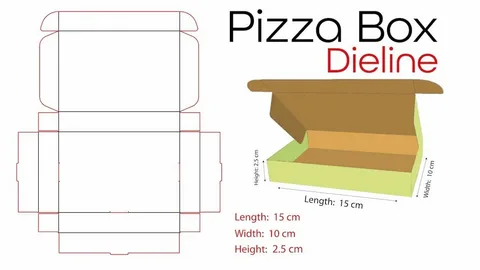
Square or rectangular-shaped pizzas, used in Detroit-style or Sicilian pizzas, need square or rectangular-shaped pizzas in special rectangular boxes of the required size. They tend to be 12 16 or 14 18, the 0.5-inch rule of clearance being followed in every direction, but in such a manner that the form is suited to that form.
Deep toppings (e.g., stuffed-crust pizzas or recipes that make a higher-depth cheese base, or loaded to the top with vegetables) may require specific depth modifications. Other facilities either have boxes with changeable height extenders or the next size progressively deeper to get clearance.
The other type is never-ending party trays and slice boxes, commonly rectangular (e.g., 18″ x 12 x 2.5), to accommodate different kinds of pizza or pre-shaped presentation designs. Such formats are more concerned with visibility and easy access to traditional round pizza accommodation that is traditional.
Materials, Depth, & Design Considerations
The depth dimension of pizza boxes should be given special attention since this directly affects the quality of food and customer satisfaction. The depth of pizza used in thin crusts ranges between 1.5 inches and 3 inches, and further in the case of deep-dish pizzas. The performance of this depth in real-world situations, however, depends on the material composition.
The industry standard is corrugated cardboard, which has been known to be highly strong in its strength/weight ratios, as well as possessing thermal insulation properties. It is cushioned like a maintenance structure (typically B-flute or E-flute) even when stacking and even in transportation, yet it also makes the structure strong. Recycled content variants are gaining ground, and it is both an environmental value and a performance compromise.
Ventilation is quite important for the usefulness of the pizza box. This is made possible through small holes or vents in the strategic areas, such as the one that prevents the condensation buildup that would make crusts watery and yet allows enough heat to be stored.
The locking tab system must have a secure close feature and must not be too complex to operate by delivery personnel and end users. Space allocation is one such aspect, and the best real estate would be the lid where the logo would be placed and the marketing message would be placed. Side panel print width will depend on the box depth, which will impact design opportunities and brand presence during stacking and storage.
Why Choosing the Right Pizza Box Size Matters
Containment is only one of the impacts of proper sizing of pizza boxes. Customer experience begins when the box holding the pizza is opened and the appearance of the package is also a very important element that defines the satisfaction levels. An appropriate display of a pizza in its container would make it appear fresh, professional and well-organized, whereas a bad fit is a glaring sign of a quality issue.High cost implications exist along many dimensions. Big boxes consume material resources, contribute to the unit cost, and require more space on your warehouse and even transportation. The larger boxes than necessary will necessitate fewer deliveries by the delivery vehicles and this will increase the fuel costs and reduce efficiency.
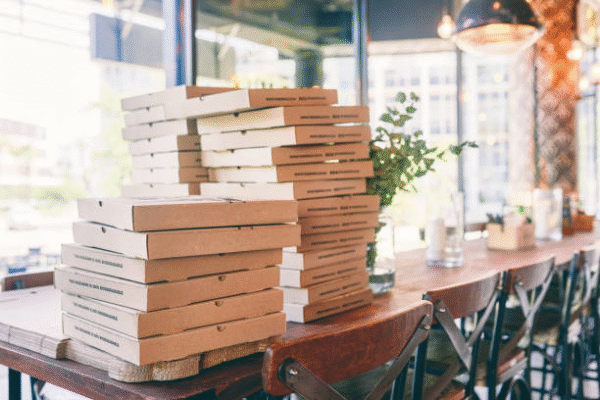
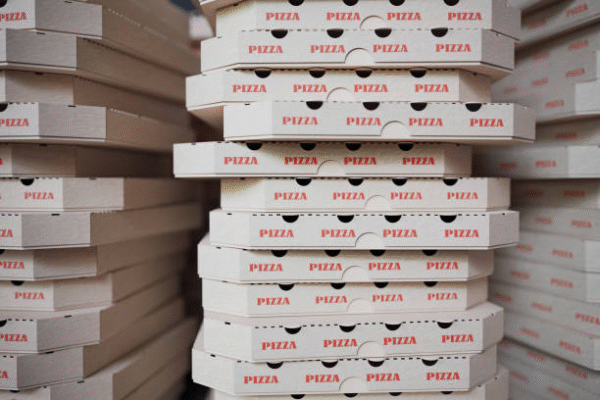
Stackability is also a very critical concept in large-volume operations. Balanced, correctly sized boxes can fit in a lot better and reduce the likelihood of falling in transit, and enable the delivery trucks to be filled with more goods. This is also significant in the customer homes, where pizza boxes will be needed to accumulate during parties or during bulk orders.
Businesses and consumers are getting even more concerned with issues of sustainability. Right-sized packaging reduces the use of cardboard, reduces the amount of wastes, and demonstrates environmental responsibility. This fact is to be taken into consideration, in particular, due to the fact that many municipalities demand more challenging recycling policies, and consumers are more conscious about the environment.
How to Choose the Ideal Pizza Box Size for Your Business / Use Case
You will have to systematically assess your own operational needs to determine the optimal size of your pizza box. The best way to begin is to list all your menu of pizzas with the different sizes of the diameter, but also with the standard types of toppings, height, and crust thicknesses. This inventory makes up your reference point for size decisions.
Customer base analysis provides valuable data on the usage trends. Delivery-intensive operations can be centered on stackability and thermal insulation, whereas restaurants centered on dine-in can be centered on presentation and easy transportation of take-out orders.
The volume factors also play a role, as the high-volume operations would be of an equal size, as it makes it possible to simplify the inventory management, and the low-volume ones could also receive a premium positioning with the help of custom sizes. The equation considers vehicle storage capacity, delivery bag size, and average size of orders as its variables.
The size option would directly influence the efficiency of delivery and customer service response time when you have four 14-inch boxes and three 16-inch boxes in your regular delivery bag, and the costs of the budget are higher than the cost of the boxes holding them, the complexity of the inventory, and the costs of supply chain management.
Even though tailor-made sizes can be the best match in terms of fit properties, even the volume specifications of cost-effective tailor-made production may exceed what you need, and the standard ones will be less expensive, even with a few compromises.
Tips for Optimization & Best Practices
The process of optimization of pizza boxes commences with the experimentation in real life, involving real pizzas as opposed to theoretical matters. Make samples or models of your common forms of pizzas by making notes on the space requirements of the different topping combinations. This real-life approach shows practical issues that cannot be observed in specifications alone.This requires real-life calibration to ensure that there is appropriate clearance without excessively spacing.
A ratio of 0.5: 1 inch is the starting point, but some modifications might be needed based on the specific types of pizza. Document what is effective based on this type or that of the pizza so that exactly the same can be implemented in other shifts and places, whichever is possible. Fewer box sizes are easier to inventory, to staff train, and can also provide lower pricing, as a result of purchasing in bulk.
However, the standardization should never be introduced at the expense of compromising quality, and sometimes the additional complexity of producing two sizes is preferable to one. The optimization of design must be on the entire cycle of the storage (flat) to customer use. Foldable boxes are effective in saving on storage and man-hours for people. These user-friendly designs improve customer experience, and conversely, reliable ways of closing boxes ensure that products are not lost on their way, and the same brand is used across all box sizes to create a sense of consistency and foster a similar customer experience.
However, ensure that the elements of branding are well balanced without being enveloped by different sizes of boxes, and revise where necessary to enable the brands to produce the best impact.
Common Mistakes to Avoid
The most common mistake is to use overly deep boxes, which help pizzas travel sideways during transportation. Although an additional space may seem secure with tall toppings, excess space in the vertical direction and a lack of proper fit in the lateral direction would cause mobility problems, which will cause poor presentation.
The principal reason that leads to overestimating of the size requirements is good intention, and this creates waste and unnecessary expenses. The fact that the bigger-is-better mentality is presented to seem customer-oriented does not imply that it improves the dining experience, but instead adds to the operating expenses.
The incorrect calculation of the height of some pizzas can also be one of the issues, which is demonstrated by measurement and testing. Deep-dish pizzas, loaded specialty types, and stuffed-crust types need adequate clearance in the vertical that could allow the structure to maintain its integrity and aesthetic appeal.
Such a deficiency in thermal performance characteristics can have an enormous impact on food quality. Large boxes will also allow excessive loss of heat, and bad ventilation will lead to condensation, which will make crusts sensitive. The material should be designed in a manner that it is not going to overheat and will not excessively retain moisture.
Conclusion
Proper selection of the right size of the pizza box is also a strategic decision that considers customer satisfaction, business efficiency, and profitability. The thing here is that you must be able to find that appropriate balance between providing you with adequate space concerning your specific brands of pizza and creating the minimal amount of wastage and the maximum cost-effectiveness possible.
The dimensions of the standards and the regional mismatch to the specifics of special types of pizzas and the features of materials used all play a significant part in working out an ideal variant of a packaging solution. Now that you have the guidelines and now that you know what to avoid, you can be assured that your wrappings on the Pizza will be an addition to your food masterpieces rather than a denial.
You should take the time and evaluate what you have in the way of pizza boxes, test the different alternatives using the items you have, and you should not be afraid of consulting with the packaging experts, and make the most suitable solution to your special business requirements.
FAQs
What size box for a 14-inch pizza? The most common 14-inch pizza will be ready in a 16-inch box, which will have the suggested 1-inch clearance in all directions. Others set 15-inch boxes to be tighter in fit; however, 16-inch boxes are more protective in transportation and handling.
How deep is the box required for deep-dish pizza? The typical boxes used to hold deep-dish pizzas need a depth of 3 to 4 inches, which is much higher than the normal thin-crust types. Deep dish Chicago style usually requires a 4-inch depth to allow the thick crust and large amounts of the sauce and cheese layers.
Will different styles fit universal box sizes? Although it may be possible, universal sizing usually undermines quality in certain types of pizza. Instead of a single size that fits badly with your menu, it is better to have 2-3 optimized sizes that serve your menu appropriately. But in case operational simplicity is an important factor, select dimensions that can support your largest and tallest size pizzas.What size pick box pizza? Measure the widest part of the baking dish when the pizza is completely cooked and topped. To this, add 1 or 2 inches to the size of the box. In height, take the tallest point, including toppings and you add 0.5 -1 inch clearance. Always use real pizzas as opposed to the measurements.