
Custom vape packaging errors occur very frequently and astonishingly frequently even in experienced brands that are thoroughly aware of the regulations. Millions fail despite taking the necessary warnings into consideration and making good-faith attempts to comply with such requirements as those of the FDA or other applicable international regulations.
The misunderstanding is that these problems occur due to the existence of inappropriate regulations that are not too exact and complicated. Practically, most of them are due to avoidable mistakes in the packaging design, structural decisions and manufacturing implementation that occur much earlier than the actual production starts.

There is no missing regulations that are behind most of the vape packaging compliance failures: it is made due to avoidable design, structural, and manufacturing errors early into the packaging process.
To ensure absence of compliance problems in custom vape packs, it is important to plan the structure early before laying out and manufacturing with uniformity, not with last minute rushes.
Mistake #1: Treating Compliance as a Label-Only Requirement
One of the most common types of misjudgment we come across in the vape packaging compliance cases is based on the sole application of the right warning text and icons.
The law, like the FDA requirements on the covered tobacco products like e-cigarettes, requires warning labels such as a warning that it contains nicotine. Being an addictive chemical, Nicotine should be visible, readable, and take at least 30% of the primary display panels, in a high contrast (e.g. black on white or white on black) 12-point font. The presence of a warning text is not sufficient to ensure compliance when the text is obscured, distorted or compromised by the packaging structure, e.g. the presence of flap, sleeve or closure on the label so that an element of the label is not visible in normal use or when heavy finishes render the text less legible over the course of the product usage.
Any compliance components introduced as an after thought in the graphic design stage usually results in hasty repositioning that does not go hand in hand with other layout requirements or breaks the minimum visibility requirement.
| Misconception | Actual Risk |
| Labels alone ensure compliance | Structural obstruction |
| Artwork-first approach | Layout conflicts |
| Late-stage fixes | Increased rejection risk |
Mistake #2: Ignoring Structural Constraints During Design
Beginning artwork without a structural dieline that is locked nearly guarantees the occurrence of vape packaging design errors that influence compliance.

Such aspects as direction of opening, folding, and closing system and placement of internal inserts all directly affect the ability of the mandatory vape warnings to be seen on primary display locations and not distorted. As an example, a box of a draw-type or magnetic closure may move or hide warnings in case the package is manipulated or shown, not meeting the conspicuous placement requirements. Text can also be warped by tight folds or curved surfaces causing legibility to drop below the regulatory limits.
Dielines should be revised and accepted on conformity consideration prior to completing the artwork- most designers forget the influence of structural constraints on accessibility and stability of the label label in the long term.
| Structural Factor | Compliance Impact |
| Opening direction | Warning visibility |
| Box rigidity | Label stability |
| Insert clearance | Accessibility control |
Mistake #3: Choosing Packaging Based on Appearance Alone
Beginning artwork without a structural dieline that is locked nearly guarantees the occurrence of vape packaging design errors that influence compliance.
Such aspects as direction of opening, folding, and closing system and placement of internal inserts all directly affect the ability of the mandatory vape warnings to be seen on primary display locations and not distorted. As an example, a box of a draw-type or magnetic closure may move or hide warnings in case the package is manipulated or shown, not meeting the conspicuous placement requirements. Text can also be warped by tight folds or curved surfaces causing legibility to drop below the regulatory limits.
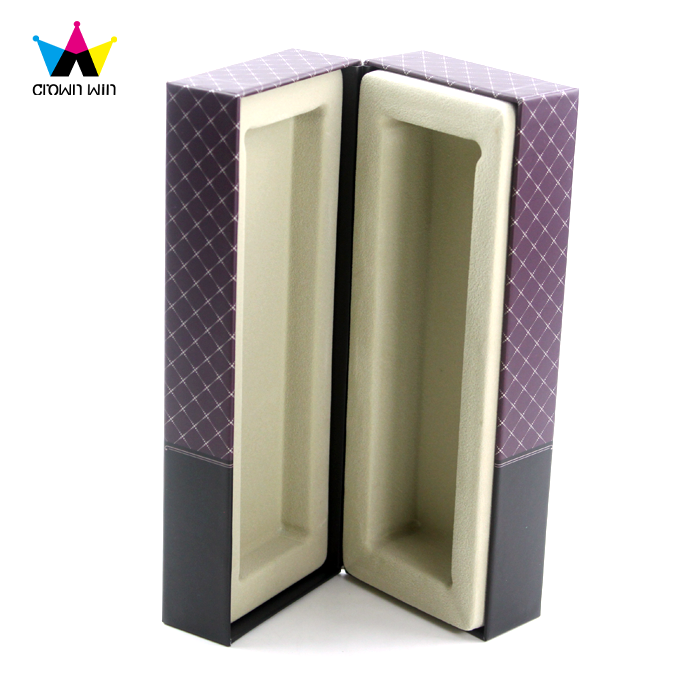
Dielines should be revised and accepted on conformity consideration prior to completing the artwork- especially since custom printed vape packaging boxes frequently combine multiple premium effects that interact unpredictably with legibility requirements.
Mistake #4: Overlooking Manufacturing Variability
The assumption of an accepted sample is a risky oversight that ensures that entire production batches adhere to it.
Practical production brings small yet significant variations: the movement of print registration of even 0.3 0.5 mm may force the warnings out of the safety zone or lead to partial blocking; die-cutting tolerances vary over the years; assembly can be inconsistent (labels can be hidden by wrongly placed sleeves or inserted in the wrong orientation). These risks are further enhanced by supplier variation or change to batch-to-batch variation in the amount of respectable paper stock and ink, causing a passing proof to become a failure in non-compliance with repeated occurrence.
| Manufacturing Issue | Compliance Risk |
| Print misalignment | Obstructed warnings |
| Tolerance drift | Structural non-compliance |
| Inconsistent assembly | Repeat failures |
Mistake #5: Failing to Plan for Long-Term Compliance Consistency
Preliminary approvals usually conceal defects that can occur in repeat orders or with an update in regulations.
The same small tolerances that were tolerated in the first production may be later moved beyond limits when the tools wear out, or the materials or the operators are changed. Without change management, new requirements like new font size minimum, positioning, or other contrast will make the current layouts non-conforming in the morning. Brands that lack a standard master dielines, version controlled files and official re-validation procedures are subject to a perpetual re-work, delay, and an increase in operational risk.
Key long-term risks include:
- Haphazard dieline correction resulting in imprecise location of warning.
- Change in materials in lots which cause variations in surface contrast and legibility.
- Changes in suppliers without re-checking compliance margins.
- Absence of documented procedures of integrating regulation changes.
- Accumulative batch-wise rejections in batches due to small drifts.
How to Avoid These Compliance Mistakes
Reliable compliance as the basis of a consistent and beneficial approach should be based on the principles of considering it an inseparable component of the initial stage of packaging development, instead of a check-off.
The prevention begins with:
- Securing the structural dieline and performing compliance overlays to 3D mockups prior to the development of artwork.
- Minimal requested safe zones to cushion print/assembly and finish-thickness.
- Integration between design, structural engineering and manufacturing, at concept stage.
- Introducing uniform QC control points, such as worst-case registration tests and contrast tests.
- It requires having a single controlled master file of all the tools and updates.
This proactive, processes-oriented strategy highly eliminates the risk of the vape packaging compliance problem arising in the manufacturing process or audit.

Conclusion — Compliance Failures Are Preventable With System Thinking
The majority of compliance errors in custom vape packaging can be avoided when the brands change not from reactive solutions, but systematic and proactive planning. With a focus on disciplined structural choice, harmonized layout planning and a unified manufacturing implementation at the beginning, the compliance with regulations can be seen as an inevitable factor as opposed to a continuing problem.
Low-tolerance structural planning, layout coordination, and consistent manufacturing execution have brought the consistent compliance in custom vape packaging to fruition, not last-minute changes.