
Blog

Person in casual clothes presenting a brown paper takeout bag toward the camera.
Blog

The Complete Guide to Takeout Paper Bag Sizes

To decide on the proper size of the takeout paper bag, it is necessary to know the dimensions, measure them properly, choose the right materials and balance the functionality with cost-effectiveness. Practicing what is outlined in this overall guide, companies can best package their strategy to improve customer experience and gain control over their costs at the same time as reinforcing their brand image. The trick is to test all the options and collaborate with quality suppliers who can be aware of the requirements of food service.

Blog

Rigid vs Flexible Packaging: A Comprehensive Guide for Modern Businesses

Both rigid and flexible packaging have certain benefits depending on the applications and business goals, which makes them different and appropriate to use. Rigid packaging offers better protection, high-end positioning, and better barrier properties at a higher cost and negative impact on the environment through the materials and transportation. Flexible packaging also offers high cost savings, shipping performance, and flexibility in design at the risk of reducing the level of protection and barrier functionality. The best option should be selected with the consideration of product features, brand position, budget limitation, distribution demand and sustainability objectives. Most of the effective packaging solutions are ones that take the hard and soft aspect in order to give the greatest advantage with minimal disadvantages resulting in hybrid products that offer the best product protection, cost-effectiveness, and customer experience across the entire supply chain.
Blog

The Ultimate Guide to Coffee Packaging Design: How to Create Bags That Sell

To design effective coffee packaging, it is necessary to balance between the practical needs, such as the need to preserve freshness and the need to comply with certain regulations, and design factors that should be used to create brand identity and stimulate sales. The trick here is that, you need to know your target customers, make informed decisions regarding materials and formats and collaborate with stable suppliers who can realize what you want to do regularly. With packaging being considered as strategic investment in brand as opposed to a commodity being bought, roasters will be in a position to develop unique packaging products that will be memorable in competitive markets as well as ensuring the growth of customer relationships and sustainable business development.

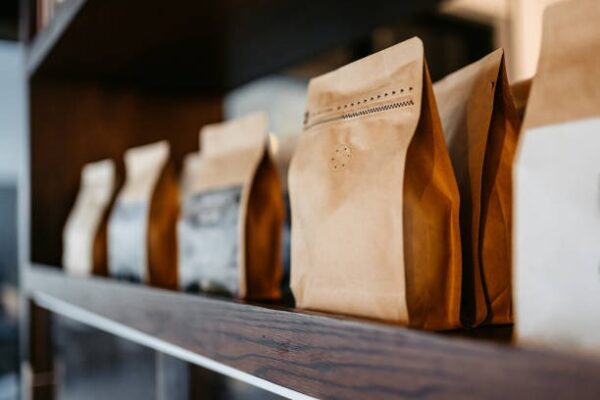
Kraft paper coffee packaging bags arranged on wooden shelf for sale.
Blog

What is Coffee Packaging: The Complete Guide

This holistic reference has traversed all the facets of coffee packaging, of simple principles of barrier and new technologies of sustainability. The best coffee packaging plans are the ones that meet the product protection needs at moderate costs, brand goals, and consumer demands. The industry is still developing towards more sustainability and technological advances, so keeping abreast of the latest technological advances in packaging and best practices is more and more a competitive necessity. The future of coffee packaging will be probably characterized by smarter material, increased sustainability and more capabilities of being customized which makes it crucial that coffee businesses should be able to develop strategies in packaging that can adjust to the changing market needs without compromising the quality of the product and brand.

Blog

The Complete Guide to Ecommerce Packaging: From Protection to Brand Experience

To achieve success in ecommerce packaging, there is a need to strike a balance: secure products in transit, provide favorable brand experiences, control costs and meet an increasing level of sustainability demands. The best solution to this is to know your unique product needs, tastes, and business goals, and then apply solutions to packaging that are seen as strategic investments in your brand, as opposed to shipping requirements. Frequent testing, collaboration with suppliers, and feedback of customers will allow continuous optimization that will propel the efficiency of operations and customer satisfaction.

Blog

PR Packages Meaning: Complete Guide to Strategic Brand Marketing

PR packages are carefully-selected promotional packages that are forwarded to influencers, media professionals and content creators to create genuine brand recognition and third-party approval. These marketing tools of strategy are an integration of carefully modified products, insightful packaging, and personalities to motivate the desire to produce organic content and create industry relationships in the long-term. Its success is pegged on strategic choice of recipient, quality implementation, brand consistency and authentic relationship building as opposed to transactional influence-seeking initiatives when reaching out to influencers.

Blog

The Complete Guide to Types of Boxes

Awareness of the special characteristics and applications of the folding cartons, rigid boxes and corrugated containers will help businesses make prudent choices as far as protecting, presenting, and not being expensive and environmentally friendly packaging is concerned. Folding cartons find best use in retail store where cost-effectiveness and printability are the considerations of most significance, rigid boxes find usage in luxury types of applications where a high quality presentation and durability are required and corrugated boxes find use in areas where they are the most beneficial in terms of shipping security and flexibility. The secret of effective packaging decision is to critically analyze your special product requirements, financial constraints, shipping realities, and brand location to find the one that would meet your special requirements most optimally. Rather than going by industry norms, consider ways the different kinds of boxes can help you meet your goals to deliver a customer experience, your sustainability commitments, and business requirements.

Blog

Types of Mailer Boxes: A Complete Guide to Custom Packaging Solutions

This is a complete guide to all that businesses need to understand about mailer boxes including the material choice and design guidelines as well as the sustainability and cost optimization measures. With the knowledge of the most important aspects of a successful design of a mailer box, ways to avoid common pitfalls, and apply strategic solutions to the branding process and customer experience, businesses can use mailer boxes as a potent marketing instrument that stimulates engagement, loyalty, and business development in the ever-competitive e-commerce environment.

Blog

Mailer Box Design Ideas: 13 Creative Ways to Elevate Your Brand

The mailer box design transforms the simplest shipping boxes into the most potent branding instruments that could assist to enhance customer experience, broaden social communications, and form brand loyalty by making reasonable decisions regarding the material to be used, creative visual decisions, and taking ample consideration of aesthetic values and the practical demands of shipping.

Blog

Creative Brownie Packaging Ideas That Wow Customers

To package brownies successfully, it is necessary to find a balance between functionality, aesthetics, and costs and to make it represent your brand and address customer expectations. When it comes to cost-efficient kraft boxes and high-tech tin containers, the most important thing to do is to choose materials and designs that will not ruin your product, but leave a good impression in customers. When working on your packaging strategy, think about sustainability, pick the practical shipping needs, and consider the occasion-specific needs, and keep in mind that reasonable packaging can explain higher prices and support the brand loyalty and stimulate buying again.

Blog

How is Mango Packaged: From Farm to Table

The process of mango packaging and transportation has an elaborate system of picking, special containers, controlled atmosphere, and cold chain, in order to provide quality fruit which is produced in the tropical belts to the international markets. To achieve success, special care about the temperature and humidity, protective wrapping materials, and compliance with the regulations is necessary, as well as mitigation of the threat of mechanical damages, bio threats, and environmental conditions that may affect the quality and shelf life of fruits in the entire supply chain.

滚动至顶部